

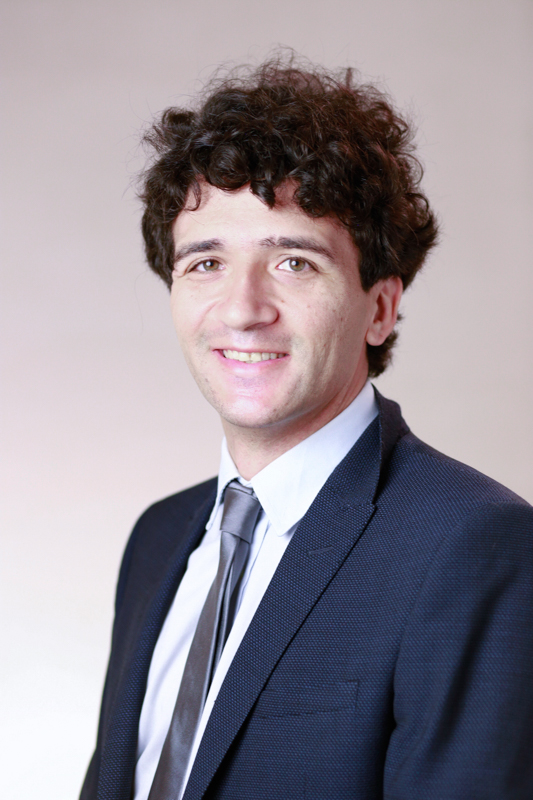
Profile
Teaching
Teaching activity
Teaching responsibility for modules/courses
- Ade - bioetica del dolore e delle cure di fine vita (1 cfu) (cod. 1589Z) per Laurea Magistrale Ciclo Unico 6 anni in Medicina e chirurgia
- Elementi di medicina interna (cod. 376FF) per Laurea Magistrale Ciclo Unico 5 anni in Farmacia

Student consultation hours
Location: Ospedale Cisanello, Edificio 30, 3° piano, Stanza 54
Time: Venerdì mattina, previo appuntamento via email
Research
Research interests
Alessandro Mengozzi, MD, PhD, is an RTDA (Italian Junior assistant professor) in the Department of Clinical and Experimental Medicine at the University of Pisa. His research aims at exploring the early mechanisms of cardiometabolic damage with a translational approach, focusing on vascular function, inter-organ cross-talk (between vascular and adipose tissue), and circulating biomarkers of early cardiometabolic impairment (mitochondrial function and non-coding RNAs). He leverage on a multidisciplinary group at Microcirculation Lab, UniPi, and he has established strong collaborations within the University of Pisa and with leading research groups across Italy and Europe.
The results of dr. Mengozzi’s research have been published in major international journals, presented at national and international cardiometabolic meetings, and have received awards from the Italian Society of Arterial Hypertension (SIIA), the Italian Society of Diabetology (SID), the European Society of Cardiology (ESC), and the European Association for the Study of Diabetes (EASD).
Publications
- Risk of falls and syncope across frailty levels in hypertensive older adults: a longitudinal study (Rivasi, G.; Capacci, M.; Mengozzi, A.; Ceccarelli, G.; Vinci, M.; Giambusso, V. G.; D'Ambrosio, G.; Gori, V.; Liccardo, A.; Bisignano, M. F.; Pardini, N.; Calsolaro, V.; Rogani, S.; Basile, G.; Bo, M.; Mossello, E.; Virdis, A.; Ungar, A. - 2026 - 1.1 Articolo in rivista)
- Hypertension in autoimmune rheumatic diseases – a position paper from the ESH working group on small arteries (Gkaliagkousi, E.; Doumas, M.; Lazaridis, A.; De Ciuceis, C.; Agabiti-Rosei, C.; Narkiewicz, K.; Anyfanti, P.; Malliora, A.; Stellos, K.; Vlachogiannis, N.; Stoenoiu, M. S.; Stavropoulos, K.; Dimitroulas, T.; Mavraganis, G.; Stamatelopoulos, K.; Terentes-Printzios, D.; Ikonomidis, I.; Rios, F.; Kutryb-Zajac, B. A.; Paneni, F.; Mengozzi, A.; Nosalski, R.; Georgiopoulos, G.; Pavlidis, G.; Tual-Chalot, S.; Camargo, L.; Cappelli, F.; Dabrowska, E.; Quarti-Trevano, F.; Hellmann, M.; Masi, S.; Montezano, A.; Winklewski, P.; Wolf, J.; Costantino, S.; Drenjancevic, I.; Taddei, S.; Guzik, T.; Kreutz, R.; Delles, C.; Touyz, R.; Persu, A.; Weber, T.; Viigimaa, M.; Grassi, G.; Virdis, A. - 2026 - 1.1 Articolo in rivista)
- Hypertension in autoimmune rheumatic diseases: a position paper from the European Society of Hypertension working group on small arteries. Part A: pathophysiology, prevalence and cardiovascular risk estimation (Gkaliagkousi, Eugenia; Lazaridis, Antonios; De Ciuceis, Carolina; Doumas, Michael; Narkiewicz, Krzysztof; Agabiti-Rosei, Claudia; Anyfanti, Panagiota; Malliora, Anastasia; Stellos, Konstantinos; Vlachogiannis, Nikolaos; Stoenoiu, Maria S.; Stavropoulos, Konstantinos; Dimitroulas, Theodoros; Mavraganis, Georgios; Stamatelopoulos, Kimon; Terentes-Printzios, Dimitrios; Ikonomidis, Ignatios; Rios, Francisco; Kutryb-Zajac, Barbara Anna; Paneni, Francesco; Mengozzi, Alessandro; Nosalski, Ryszard; Georgiopoulos, Georgios; Pavlidis, George; Tual-Chalot, Simon; Camargo, Livia; Cappelli, Federica; Dabrowska, Edyta; Quarti-Trevano, Fosca; Hellmann, Marcin; Masi, Stefano; Montezano, Augusto; Winklewski, Pawel; Wolf, Jacek; Costantino, Sarah; Drenjancevic, Ines; Taddei, Stefano; Guzik, Tomasz; Kreutz, Reinhold; Delles, Christian; Touyz, Rhian; Persu, Alexandre; Weber, Thomas; Viigimaa, Margus; Grassi, Guido; Virdis, Agostino - 2026 - 1.1 Articolo in rivista)
- Depressive symptoms in older patients undergoing electrical cardioversion of persistent atrial fibrillation. A possible association with clinical complexity, physical performance and inflammation (Fumagalli, S.; Biagioli, M.; Niccolini, M.; Tariello, A.; Berni, E.; Davino, D.; De Angelis, V.; Santamaria, E.; Mengozzi, A.; Di Serio, C.; Spanalatte, G.; Da Silva Nakano, D. M.; Cagnoni, C.; De Grazia, D.; Diemberger, I.; Virdis, A. - 2026 - 1.1 Articolo in rivista)
- Plasma phosphorylated tau and cerebrovascular burden predict emergency department use in dependent older patients (Colitta, Alessandro; Mazzarone, Tessa; Corsi, Sara; Petrozzi, Lucia; Mengozzi, Alessandro; Del Chicca, Marta; Rita Sessa, Maria; Bacciardi, Edoardo; Virdis, Agostino; Monzani, Fabio; Baldacci, Filippo; Turco, Francesco; Siciliano, Gabriele - 2026 - 1.1 Articolo in rivista)
- Circulating mitochondrial DNA signature in cardiometabolic patients (Mengozzi, Alessandro; Armenia, Silvia; De Biase, Nicolò; Punta, Lavinia Del; Cappelli, Federica; Duranti, Emiliano; Nannipieri, Virginia; Remollino, Rossana; Tricò, Domenico; Virdis, Agostino; Taddei, Stefano; Pugliese, Nicola Riccardo; Masi, Stefano - 2025 - 1.1 Articolo in rivista)
- The renal resistive index is associated with microvascular remodeling in patients with severe obesity (Moriconi, D.; Mengozzi, A.; Duranti, E.; Cappelli, F.; Taddei, S.; Nannipieri, M.; Bruno, R. M.; Virdis, A. - 2023 - 1.1 Articolo in rivista)
- Treatment with recombinant Sirt1 rewires the cardiac lipidome and rescues diabetes-related metabolic cardiomyopathy (Costantino, Sarah; Mengozzi, Alessandro; Velagapudi, Srividya; Mohammed, Shafeeq Ahmed; Gorica, Era; Akhmedov, Alexander; Mongelli, Alessia; Pugliese, Nicola Riccardo; Masi, Stefano; Virdis, Agostino; Hülsmeier, Andreas; Matter, Christian Matthias; Hornemann, Thorsten; Melina, Giovanni; Ruschitzka, Frank; Luscher, Thomas Felix; Paneni, Francesco - 2023 - 1.1 Articolo in rivista)
- Serum Uric Acid Predicts All-Cause and Cardiovascular Mortality Independently of Hypertriglyceridemia in Cardiometabolic Patients without Established CV Disease: A Sub-Analysis of the URic acid Right for heArt Health [URRAH] Study (Mengozzi, A.; Pugliese, N. R.; Desideri, G.; Masi, S.; Angeli, F.; Barbagallo, C. M.; Bombelli, M.; Cappelli, F.; Casiglia, E.; Cianci, R.; Ciccarelli, M.; Cicero, A. F. G.; Cirillo, M.; Cirillo, P.; Dell'Oro, R.; D'Elia, L.; Ferri, C.; Galletti, F.; Gesualdo, L.; Giannattasio, C.; Grassi, G.; Iaccarino, G.; Lippa, L.; Mallamaci, F.; Maloberti, A.; Masulli, M.; Mazza, A.; Muiesan, M. L.; Nazzaro, P.; Palatini, P.; Parati, G.; Pontremoli, R.; Quarti-Trevano, F.; Rattazzi, M.; Reboldi, G.; Rivasi, G.; Russo, E.; Salvetti, M.; Tikhonoff, V.; Tocci, G.; Ungar, A.; Verdecchia, P.; Viazzi, F.; Volpe, M.; Borghi, C.; Virdis, A. - 2023 - 1.1 Articolo in rivista)
- Circulating Long Noncoding RNA Signatures Associate With Incident Diabetes in Older Adults: a Prospective Analysis From the VITA Cohort Study (Wenzl, Florian A; Mengozzi, Alessandro; Mohammed, Shafeeq A; Pugliese, Nicola Riccardo; Mongelli, Alessia; Gorica, Era; Ambrosini, Samuele; Riederer, Peter; Fischer, Peter; Hinterberger, Margareta; Puspitasari, Yustina; Lüscher, Thomas F; Camici, Giovanni G; Matter, Christian M; Fadini, Gian Paolo; Virdis, Agostino; Masi, Stefano; Ruschitzka, Frank; Grünblatt, Edna; Paneni, Francesco; Costantino, Sarah - 2023 - 1.1 Articolo in rivista)
- High exposure to phthalates is associated with HbA1c worsening in type 2 diabetes subjects with and without edentulism: a prospective pilot study (Mengozzi, Alessandro; Carli, Fabrizia; Pezzica, Samantha; Biancalana, Edoardo; Gastaldelli, Amalia; Solini, Anna - 2022 - 1.1 Articolo in rivista)
- Targeting SIRT1 Rescues Age- and Obesity-Induced Microvascular Dysfunction in Ex Vivo Human Vessels (Mengozzi, Alessandro; Costantino, Sarah; Paneni, Francesco; Duranti, Emiliano; Nannipieri, Monica; Mancini, Rudj; Lai, Michele; La Rocca, Veronica; Puxeddu, Ilaria; Antonioli, Luca; Fornai, Matteo; Ghionzoli, Marco; Georgiopoulos, Georgios; Ippolito, Chiara; Bernardini, Nunzia; Ruschitzka, Frank; Pugliese, Nicola Riccardo; Taddei, Stefano; Virdis, Agostino; Masi, Stefano - 2022 - 1.1 Articolo in rivista)
- SGLT2 inhibitors and thiazide enhance excretion of DEHP toxic metabolites in subjects with type 2 diabetes: A randomized clinical trial (Mengozzi, Alessandro; Carli, Fabrizia; Guiducci, Letizia; Parolini, Federico; Biancalana, Edoardo; Gastaldelli, Amalia; Solini, Anna - 2021 - 1.1 Articolo in rivista)
- Disruption of fasting and post-load glucose homeostasis are largely independent and sustained by distinct and early major beta-cell function defects: a cross-sectional and longitudinal analysis of the relationship between insulin sensitivity and cardiovascular risk [RISC] study cohort (Mengozzi, Alessandro; Tricò, Domenico; Nesti, Lorenzo; Petrie, John; Højlund, Kurt; Mitrakou, Asimina; Krebs, Michael; Mari, Andrea; Natali, Andrea - 2020 - 1.1 Articolo in rivista)
- Phthalates exposure as determinant of albuminuria in type 2 diabetes subjects: a cross-sectional study (Mengozzi, Alessandro; Carli, Fabrizia; Biancalana, Edoardo; Della Latta, Veronica; Seghieri, Marta; Gastaldelli, Amalia; Solini, Anna - 2019 - 1.1 Articolo in rivista)