




Scenarios
The debate sparked by the announcement that, from 1 October, Rai Scuola will no longer be available as a linear channel on digital terrestrial television, moving instead to RaiPlay in an on-demand environment, offers a valuable opportunity to reflect on the educational responsibility of public service broadcasting.
The history of Italian television—from Non è mai troppo tardi, launched in 1960 with Alberto Manzi—reminds us that education and mass communication form an effective combination for promoting literacy, supporting the idea that access to knowledge is a matter of collective interest and cultural democratisation.
Over time, of course, television has gradually lost its central role as the tools and digital environments that accompany our daily lives have multiplied—smartphones, platforms, podcasts, social networks and artificial intelligence systems. This process has above all transformed the relationship between people and knowledge: the scarcity of information that characterised earlier eras has been replaced by an overabundance of it, raising the problem of easy and rapid access to information without the skills and maturity needed to transform it into knowledge: knowing how to search, select sources, recognise authoritative sources, distinguish reliable information from false information, and understand the mechanisms through which algorithms organise what we select, among other things.
It is precisely in this context that the educational function of public service broadcasting—detached from any nostalgic impulse—should be rethought, not eliminated.
Rai Scuola has been one of the clearest expressions of this educational function. Its wealth of programmes devoted to history, literature, science, languages and school subjects has provided valuable resources for students, teachers and citizens, as became particularly evident during the pandemic, when public, accessible and high-quality educational content was immediately available.
The decision to move Rai Scuola to an on-demand environment certainly has a logic of its own. If the ways in which people—especially younger generations—access content are changing, public service broadcasting must change too. But we also know that using a platform changes the way we access content. In an on-demand environment, intentional choice predominates: we search for what we want, what we already know we can find.
A television schedule, by contrast, retains a pedagogically valuable possibility: the unexpected encounter. We may come across an unfamiliar subject, pause over a question we had not yet asked ourselves, or discover something that no algorithm would necessarily have selected for us. This is a very interesting distinction from a pedagogical perspective. Education does not simply mean satisfying existing interests; it also means arousing them, fostering curiosity and wonder, leaving room for hypotheses and doubts, and cultivating critical thinking and dissent.
In today’s digital ecosystem, algorithms tend to create increasingly personalised environments capable of responding to individual preferences and behaviours. Public service broadcasting should not miss the opportunity to fulfil a different function: to broaden horizons, create unexpected connections and make visible what may not necessarily attract attention but nevertheless deserves to be known, thereby contributing to lifelong education.
From this perspective, the issue of audience figures also takes on a different meaning. Rai has justified moving away from the linear channel because of its very low audience figures, but the educational value of content cannot depend exclusively on the number of people who benefit from it. Above all, not everything that is public should necessarily be governed by the quantitative logic of audience ratings.
What Rai Scuola has perhaps lacked is a systematic connection with the national school system and a more structured dialogue with digital education programmes, responding to the new educational needs of students, teachers and the wider public.
On the basis of these reflections, the complex and challenging questions we need to ask are: What does it mean to be an educational public service in 2026? In information and educational environments increasingly governed by platforms and algorithms, do we need an educational public service less than before, or do we need it more than ever?
What seems clear is that preserving the form Rai Scuola had in the past cannot be enough. What is essential is that it does not lose the function it represents.
Preserving Rai Scuola’s existing wealth of content in a comprehensive digital archive would certainly be valuable. But a public service devoted to knowledge must also continue to create new content and develop its own distinctive capacity for scientific communication: communicating scientific research as it develops, interpreting social change, engaging with schools and universities, and experimenting with forms of expression capable of reaching different audiences.
At a time when we can obtain an answer in a matter of seconds, educating people to formulate questions, verify answers and build connections represents the most contemporary form of educational television. What is needed is expertise, strategic planning and investment—not merely a change of technological platform.
All News
Photo News
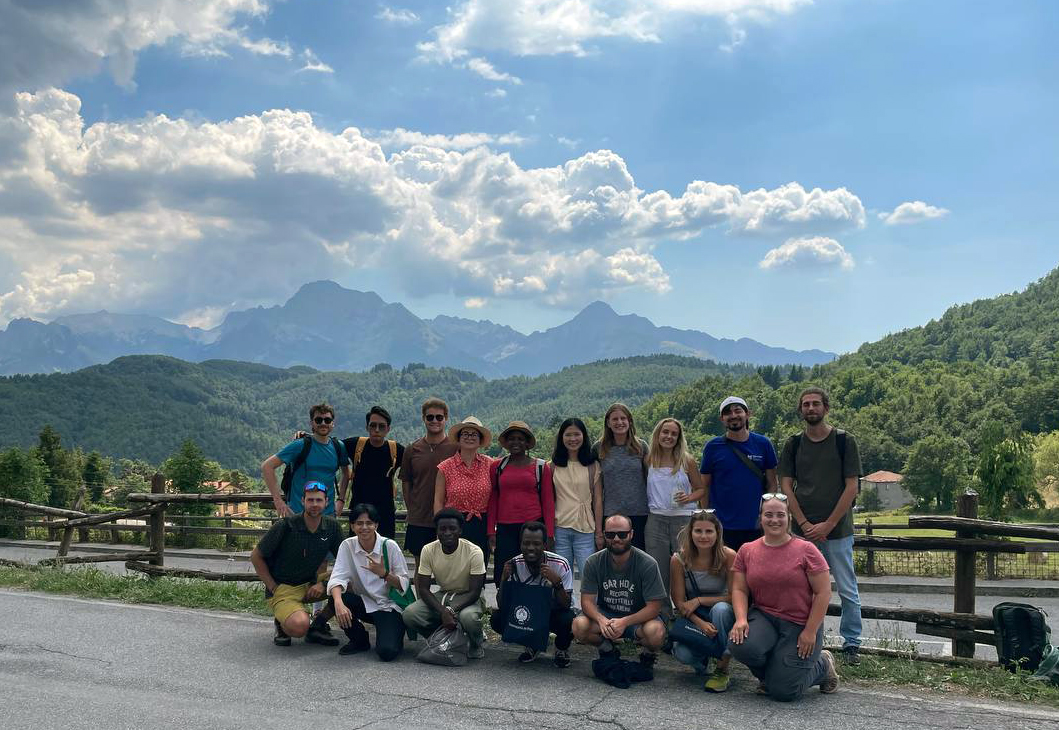
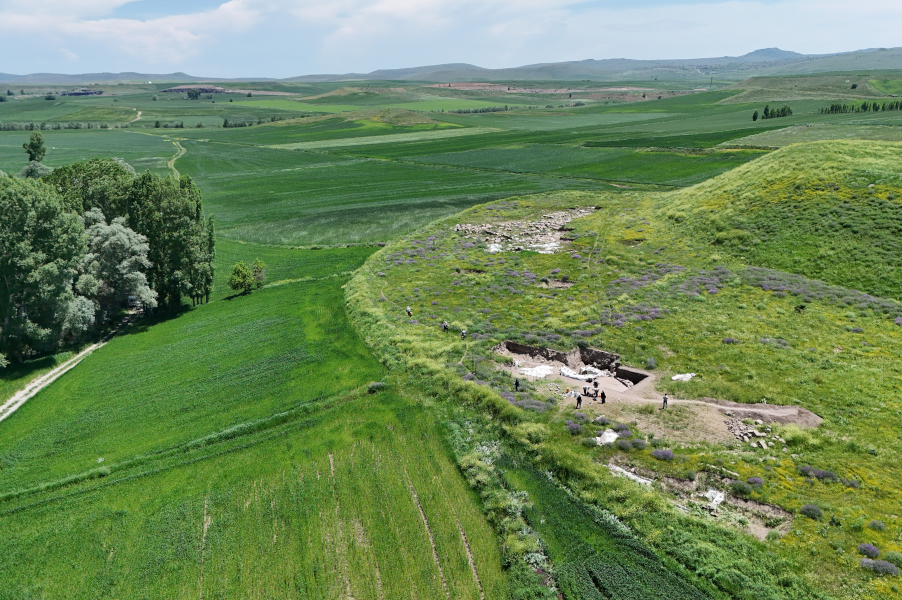
The University of Pisa’s 2026 Summer School, which also served as a case study for the International Master of Science in Rural Development (IMRD), took place in Garfagnana, based at the Fortezza di Mont’Alfonso in Castelnuovo di Garfagnana (Lucca). Entitled “Reinventing Rural: Transformative Solutions in Innovative Rural Areas – the Tuscany Case”, the Summer School focused on qualitative research methodologies for rural development. For almost a month, students explored the local area through a programme combining lectures, methodological workshops, group work and field research. The intensive course was organised in collaboration with GAL MontagnAppennino and the Circle U. European University Alliance.
Video
A special episode of the Circle U. Podcast - produced by the University of Belgrade- dedicated to the summer school "AI and Society in a Transforming World," held in Belgrade as part of the Circle U. European University Alliance from 7. to 11. September 2026.
The PhD student Ivana Janković talks with Professor Francesco Marcelloni from University of Pisa and PhD student participants from across Europe about their impressions, mobility experience, and the summer school's core theme: artificial intelligence and its impact on society.