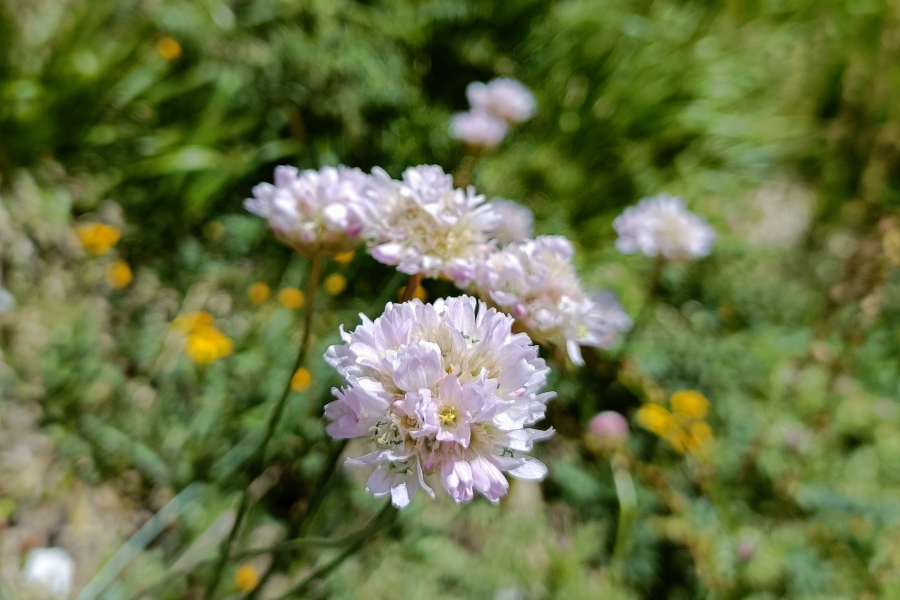


The University of Pisa is coordinating the first international project dedicated to the study of Salicornia, a salt-tolerant plant capable of growing in saline and degraded soils that could help address one of the main challenges facing Mediterranean agriculture in the context of climate change.
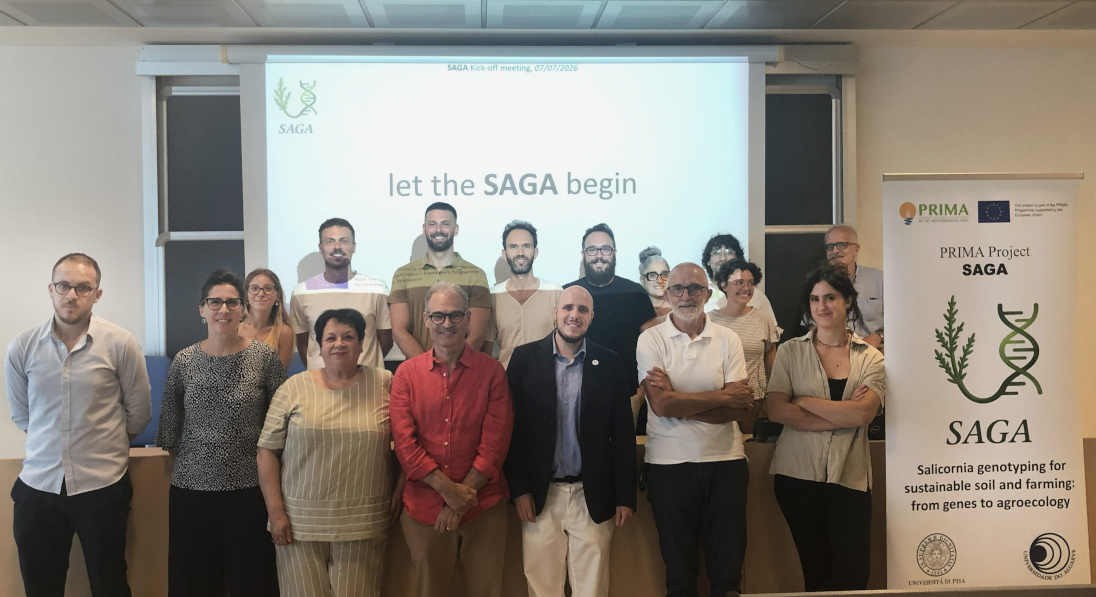
The project, named SAGA (Salicornia Genotyping for Sustainable Soil and Farming: From Genes to Agroecology), is part of the PRIMA programme (Partnership for Research and Innovation in the Mediterranean Area), funded by the Italian Ministry of Universities and Research. The three-year project, which has recently begun, is coordinated by the University of Pisa and brings together a consortium comprising the University of Algarve (Portugal), Ankara University (Türkiye) and the University of Tunis El Manar (Tunisia).
Its aim is to unlock the potential of Salicornia by investigating its genetic diversity to identify the varieties best suited to improving soil health, increasing the resilience of agricultural ecosystems and creating new production opportunities in areas most affected by climate change.
“With increasing drought and soil salinisation, identifying crops capable of thriving in areas where cultivation is currently difficult is a crucial challenge for the future of agriculture,” explains Alberto Vangelisti, project coordinator and researcher in the Department of Agriculture, Food and Environment at the University of Pisa. “Salicornia, already valued both as a food crop and for its health-promoting properties, could offer new market opportunities for small and medium-sized farmers.”
For the first time, SAGA will systematically analyse the genetic diversity and characteristics of different Mediterranean Salicornia populations. In addition to coordinating the project, the University of Pisa will lead the genomics and bioinformatics activities, from DNA sequencing using advanced technologies to studies linking genetic diversity with plant traits to identify the most promising varieties.
From the second year onwards, field trials will also begin in the four partner countries, where the selected varieties will be tested to assess their effects on agricultural productivity, soil health and microbial biodiversity. Another distinctive feature of the project will be the direct involvement of farmers, technical experts and policymakers through Living Labs, where solutions will be co-designed and tested together with their future users.
“With SAGA, we aim to fill a significant scientific gap, because despite its enormous potential for sustainable agriculture, Salicornia has never been studied systematically from a genetic perspective,” concludes Alberto Vangelisti. “Our goal is to transform this knowledge into practical tools for selecting the most suitable varieties through scientific collaboration involving both shores of the Mediterranean.”
At the University of Pisa, SAGA is being carried out by a multidisciplinary team from the Department of Agriculture, Food and Environment, coordinated by Alberto Vangelisti and comprising Alberto Pardossi, Antonella Castagna, Francesca Galli, Tommaso Giordani, Susanna Pecchia, Tiziana Lombardi, Tarek Allali, Irene Ventura, Marco Santin, Gabriele Usai and Samuel Simoni. The team brings together expertise ranging from genetics and horticulture to botany, plant pathology and agricultural economics.