

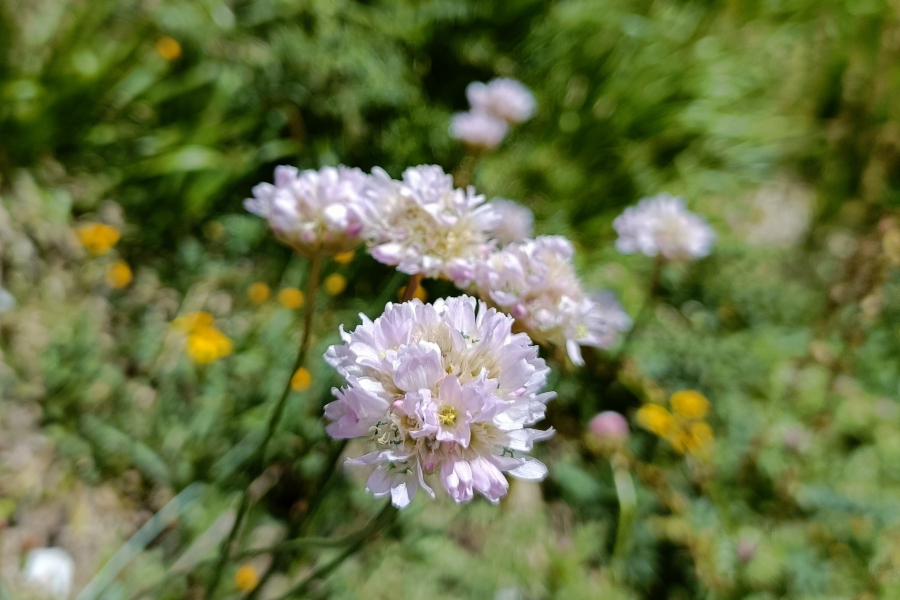
The map of Armeria species in Italy has been redrawn. A new study coordinated by the University of Pisa has redefined the distribution and classification of these Mediterranean plants across the Italian peninsula and Sicily, resolving uncertainties that had persisted for more than a century. The research, published in the international journal TAXON, established that Armeria canescens, long considered part of the Italian flora, actually grows only in the Balkans, and recognised Armeria pollinensis, found in the Pollino Massif between Basilicata and Calabria, as a distinct species. The study identifies ten species endemic to the area examined and brings the total number of Armeria species endemic to Italy to fifteen, confirming the country as the world’s second-largest centre of Armeria diversity after the Iberian Peninsula.
“Species classification is not simply a matter of names; it is the starting point for understanding and protecting biodiversity,” explains Professor Lorenzo Peruzzi of the Department of Biology at the University of Pisa, coordinator of the study. “By integrating genetic, morphological and chromosomal data, we have been able to clarify the taxonomy of a particularly complex group, correcting long-standing classifications and providing a more robust basis for future research into the distribution, evolution and conservation of these plants.”
 The study’s first author is Manuel Tiburtini, born in 1995 in Fermo, who holds a PhD in Biology from the University of Pisa. He was awarded the International Doctoral Prize by the Italian Botanical Society for his doctoral thesis on the systematics of Armeria, recognised as the best doctoral thesis in Systematic Botany. He will receive the award during the Society’s 121st Congress, to be held in Reggio Calabria from 2 to 5 September.
From a methodological perspective, the research combined DNA analyses, measurements of plants and seeds, and chromosome studies. A total of 21 populations were analysed, comprising 409 herbarium specimens and more than 2,000 seeds. The use of advanced statistical models made it possible to identify differences that are difficult to detect using traditional analytical methods.
The study, coordinated by the PLANTSEED Lab of the Department of Biology at the University of Pisa, involved the Biodiversity Conservation Centre of the University of Cagliari, the Floristic Research Centre of the Apennines of the University of Camerino and the Gran Sasso and Monti della Laga National Park, Sapienza University of Rome, the University of Calabria, the University of Naples Federico II and the University of Palermo.
The research was carried out as part of the PRIN project “PLAN.T.S. 2.0 – towards a renaissance of PLANt Taxonomy and Systematics”, led by the University of Pisa and coordinated by Professor Lorenzo Peruzzi.