

In recent years, a growing number of couples have turned to medically assisted reproduction after unsuccessful attempts to conceive naturally. This is often a complex journey, both physically and emotionally. It is within this context that MOONSHINE, a project coordinated by the University of Pisa, integrates mindfulness practices into medically assisted reproduction treatments.
The aim is not only to reduce stress and improve the psychophysiological well-being of couples, but also to develop and test a predictive mathematical model of pregnancy that considers both physiological and emotional-relational factors.
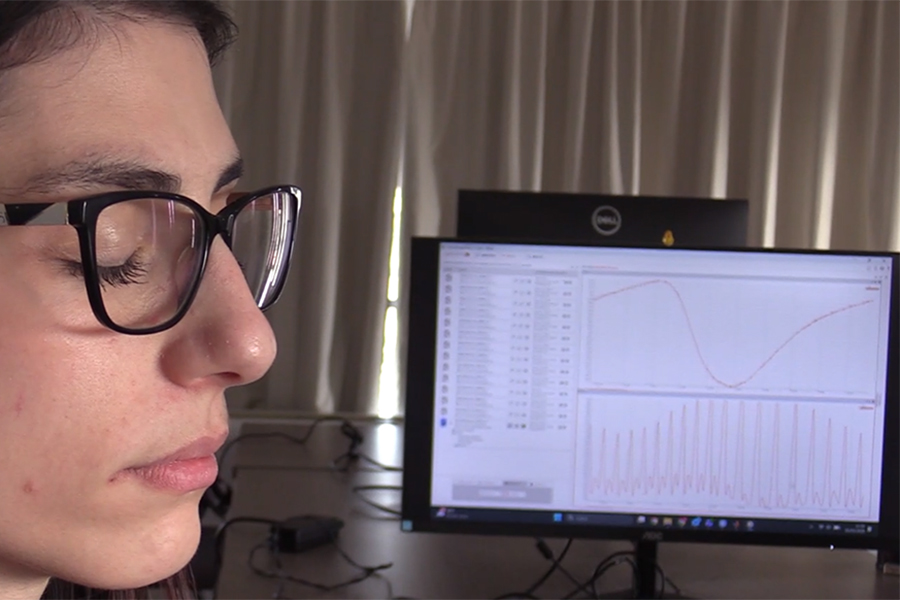
“Several studies,” explains Mimma Nardelli, Professor of Bioengineering at the University of Pisa and project coordinator, “have shown that mindfulness practice can reduce anxiety and depression in infertile women, with potentially positive effects on conception rates. The MOONSHINE project was designed to support couples about to begin medically assisted reproduction through an integrated programme that incorporates mindfulness practice guided by psychologists at the participating centres. Throughout the process, we monitor the couple’s physiological synchronisation and stress levels using minimally invasive wearable devices that record signals from the autonomic nervous system.”
The bioengineering team at the University of Pisa has developed innovative algorithms to measure the synchronisation of physiological dynamics between partners, along with mathematical models that link autonomic nervous system activity, couple physiological synchronisation, psychological state and stress levels.
Clinical testing began in Pisa in October 2024 and has so far involved three groups of approximately four couples each. A fourth group is currently participating in the programme.
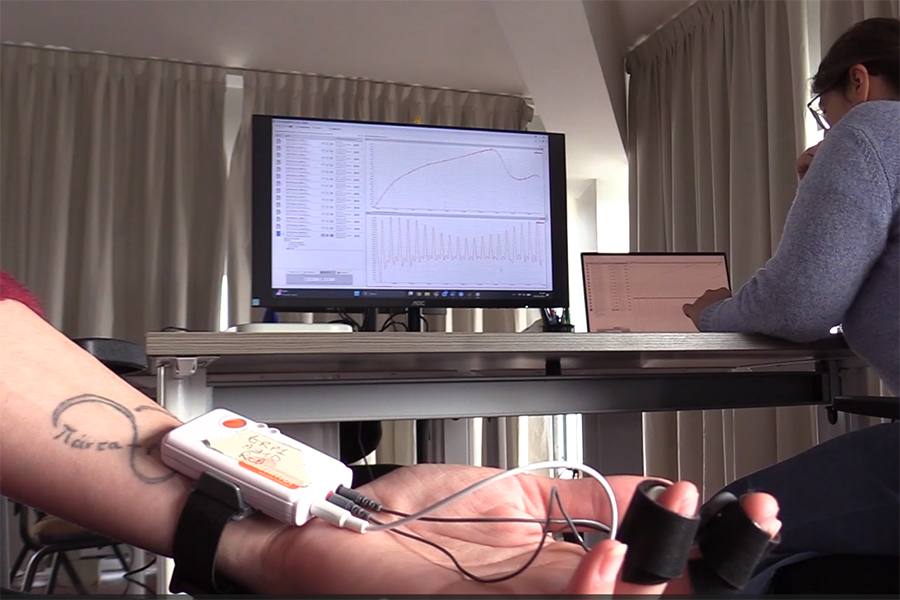
“The results obtained so far,” Nardelli continues, “show a significant increase in physiological synchronisation during the mindfulness programme and a meaningful correlation between couple physiological dynamics and parameters related to stress and body awareness. We have developed a predictive mathematical model of pregnancy that draws on data from all participating couples and links changes in vagal activity during the mindfulness programme to a psychological index reflecting the tendency not to worry or experience excessive distress in situations involving pain.”
The model may help personalise and optimise future medically assisted reproduction treatments by taking into account not only clinical parameters, but also the emotional and relational dimensions of the couple.
The MOONSHINE project (ProMOting and mOdelliNg phySiological syncHronization In iNfertile couplEs) is coordinated by Mimma Nardelli of the Department of Information Engineering (DII) at the University of Pisa. It brings together researchers from the DII and the Department of Surgical, Medical, Molecular and Critical Care Pathology at the University of Pisa, psychologists involved in the Assisted Reproduction programme at the Azienda Ospedaliero-Universitaria Pisana, and Roberta Venturella, Vice-Coordinator of the project and Director of the Assisted Reproduction Centre at the Azienda Ospedaliera Dulbecco in Catanzaro.
MOONSHINE is funded by the Italian Ministry of University and Research under the PRIN 2022 programme.