

How were the great sculptures and architectural structures of ancient Rome assembled, repaired and secured? This question lies at the heart of the HARMOGE project (Hellenistic and Roman Methods of Joining. Exploring the Joins and Attachments of Freestanding Sculpture and Architectural Decoration (2nd century BCE – 3rd century CE)), funded by the Italian Ministry of University and Research within the framework of the PRIN programme (Projects of Significant National Interest).
The project brings together the University of Pisa, Ca’ Foscari University of Venice and the Institute of Chemistry of Organometallic Compounds of the National Research Council (CNR-ICCOM), in partnership with the National Roman Museum.
The research focuses on the technologies and materials used to assemble, secure and restore marble statues and other artworks in the Hellenistic and Roman world, covering the period from the 2nd century BCE to the 3rd century CE. At the centre of the investigation are metal joints, connection elements identified in sculptures, architectural decorations and funerary monuments, which provide direct evidence of ancient construction and conservation practices.
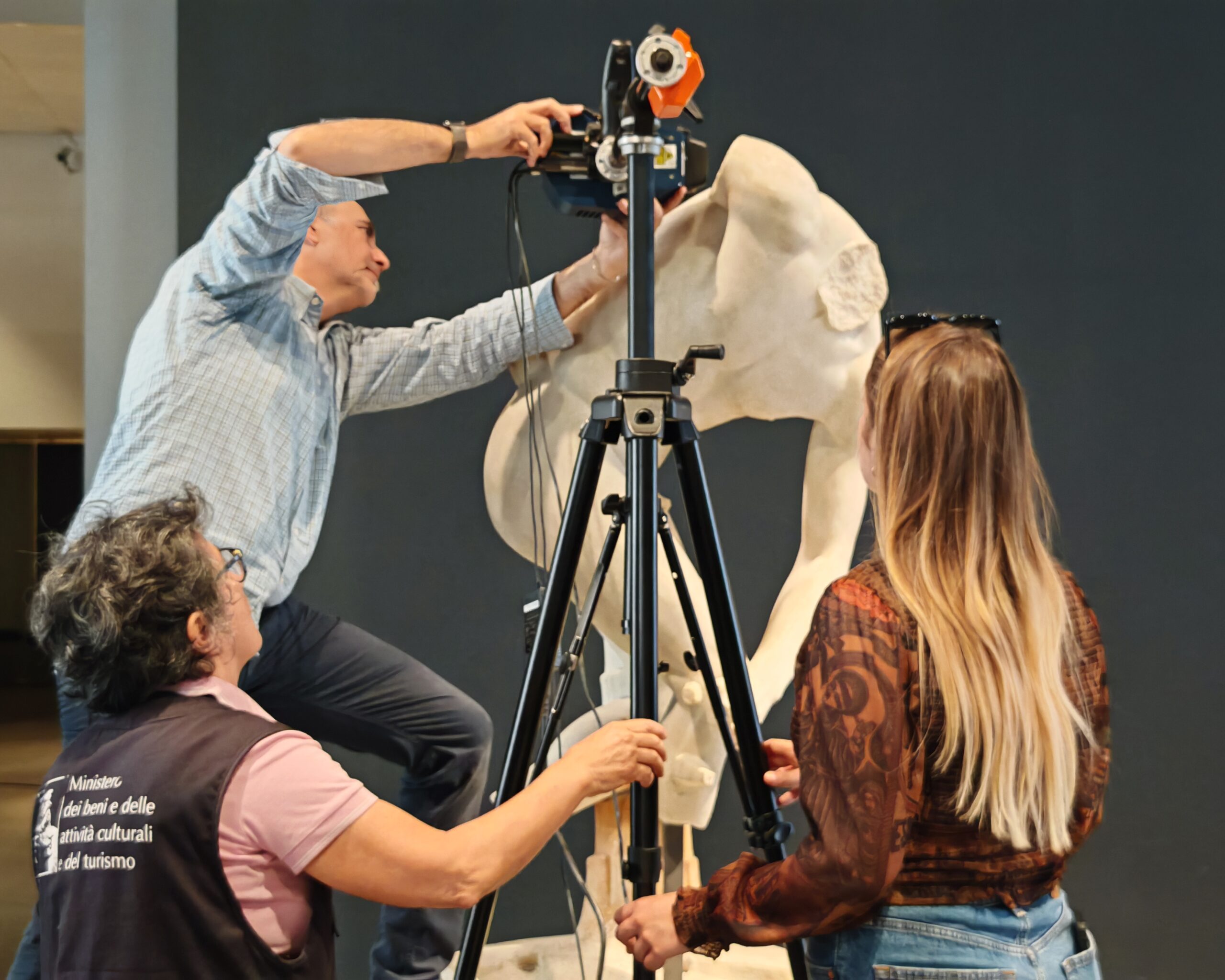
The study benefited from the extraordinary variety of artefacts preserved across the different sites of the National Roman Museum. During the first campaign of analyses, the research team examined works of exceptional importance, including the Discobolus of Castel Porziano, the Sleeping Hermaphroditus, and numerous imperial portraits, as well as a rich architectural repertoire including columns, capitals and decorative architectural elements that preserve valuable traces of ancient construction techniques.
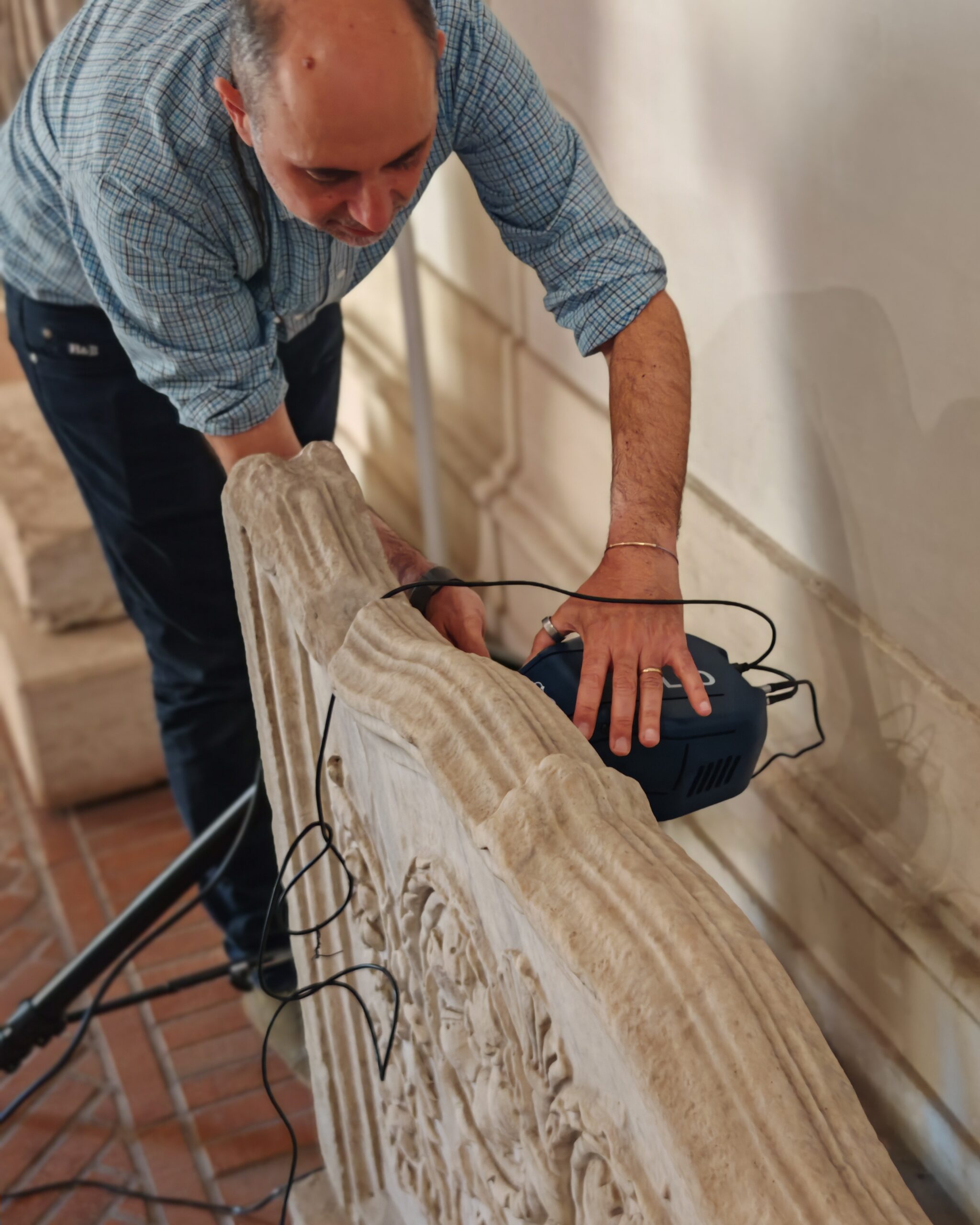
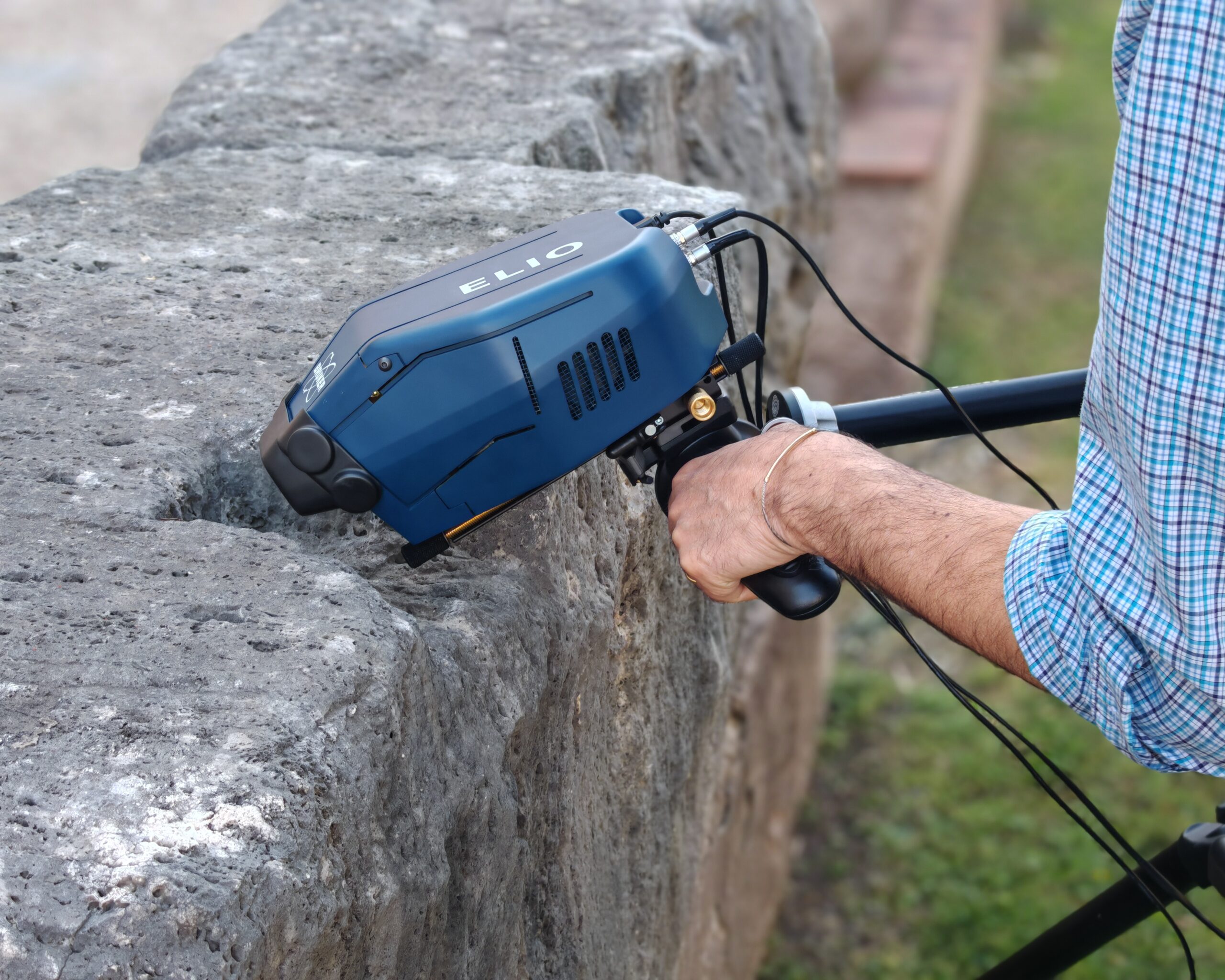
To analyse the materials, researchers employed state-of-the-art non-invasive techniques: X-ray fluorescence (XRF), carried out directly on the artworks using a portable Bruker Elio spectrometer, and Raman spectroscopy, allowing researchers to characterise the composition of corrosion layers and identify forms of organic degradation.
“For the first time,” explain Anna Anguissola and Luigi Sperti, Professors of Greek and Roman Archaeology at the Universities of Pisa and Ca’ Foscari University of Venice respectively, “techniques such as construction in separate parts and assembly methods are the focus of a large-scale initiative integrating the expertise of different institutions and scholars. The sculptural and architectural heritage we can study thanks to our collaboration with the National Roman Museum is representative of a highly varied and extremely important body of material, because it allows us to delve into the heart of ancient Rome.”
A central element of the project is the archaeometric analysis carried out by the team from the CNR-ICCOM of Pisa. “Through instruments such as XRF,” explains Stefano Legnaioli, “we will be able to build an initial database of the pins used by Roman sculptors, architects and restorers, and investigate their archaeological significance through newly acquired data”.
“The National Roman Museum is honoured to collaborate on a research project dedicated to the study of the technologies and materials used in antiquity for the assembly, securing and restoration of statues and stone artefacts,” says Federica Rinaldi, Director of the Museum. “This initiative represents an important opportunity to deepen our understanding of Roman artistic techniques, contributing to a better comprehension not only of construction processes, but also of conservation practices and the solutions adopted by ancient craftsmen. Within this collaboration, the Museum has made its collections of statues, numerous architectural decorative elements and other artefacts available to scholars, offering a privileged context for the direct analysis of materials and techniques. The National Roman Museum reaffirms its commitment to promoting scientific research by fostering dialogue between museums and academia, also with a view to enhancing cultural heritage.”
The project HARMOGE. Hellenistic and Roman Methods of Joining. Exploring the Joins and Attachments of Freestanding Sculpture and Architectural Decoration (2nd century BCE – 3rd century CE) (2022AS5M9E) is funded by the Italian Ministry of University and Research within the framework of the PRIN 2022 programme.