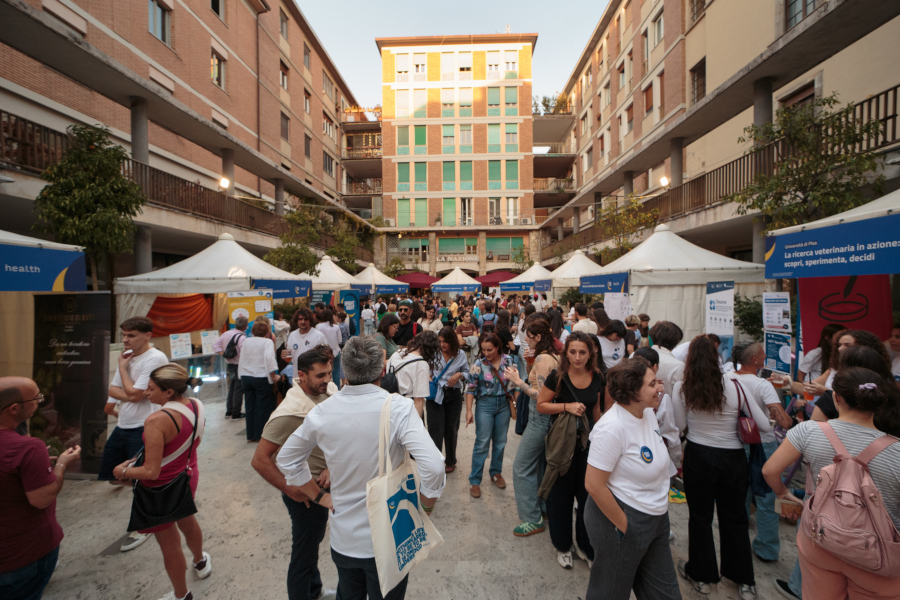


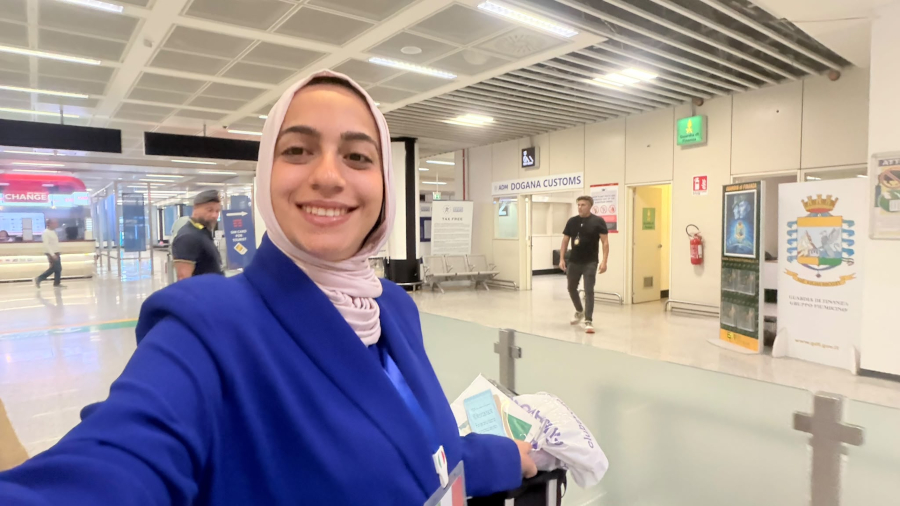
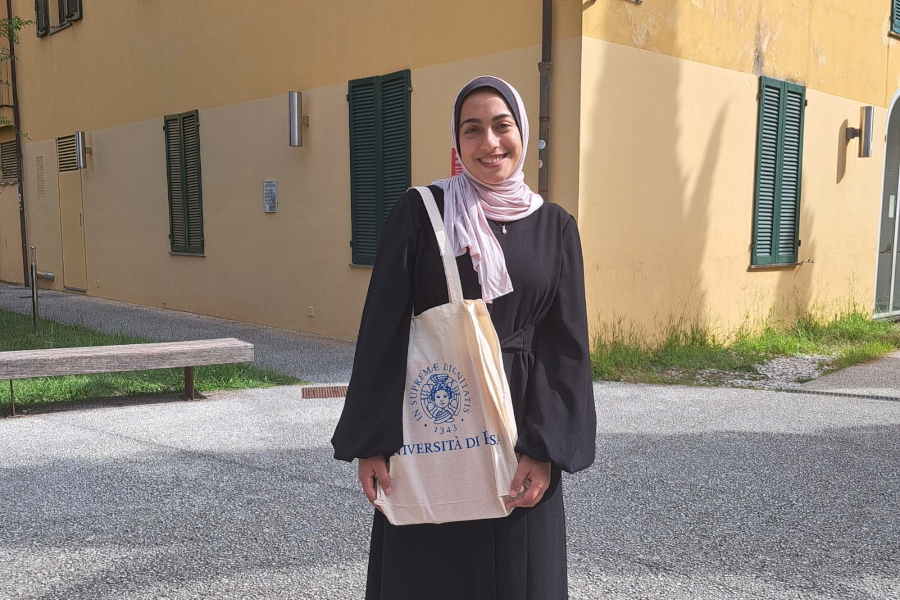
Just two weeks ago, I arrived in Pisa, a city that seems to have been built around its university: students fill the streets, bicycles cross the squares, and buildings carry the memory of centuries of knowledge. I came here not only as a new chapter in my life, but as a place where I try to understand where I come from.
I enrolled at the University of Pisa to pursue a Master’s degree in Peace Studies: Conflict Transformation and Development Cooperation. This program was granted to me through a full scholarship from the university, which opened its doors to me and stood by me from the very beginning. The University of Pisa, which has 20 campuses across the city, did not merely accept me as a student; it supported me and supported my story, and maintained continuous communication with the Italian consulate in a serious effort to facilitate my departure from Gaza.
Giovanni Federico Gronchi, Vice Rector for Cooperation and International Relations, was in touch with me while I was still in Gaza, following up on my situation, asking about me, and assuring me that the university would not leave me alone. The entire staff of the International Cooperation Office opened their hearts to me and worked hard to provide everything good for me. They understood that my acceptance into this program was not just an administrative procedure, but rather a human being carrying a story, carrying hope, and carrying a desire to learn so that I might serve my country one day.
And so, I began this academic journey carrying a question I cannot separate from my life: How can one study peace while my family in Gaza lives inside a war that has not ended? How can someone learn about conflict transformation when they come from a place where conflict has become part of daily life: fear, displacement, loss, waiting, and short messages we never know will arrive?
I did not come to Pisa alone. Gaza came with me—in the language I write in, in the names I fear forgetting, in the messages I reread multiple times before sending them to my mother. Gaza came with me in the homes I no longer know still stand, in the faces I lost, and in those I
left behind waiting for an ordinary day that never arrives.
The Gaza I Carry With Me
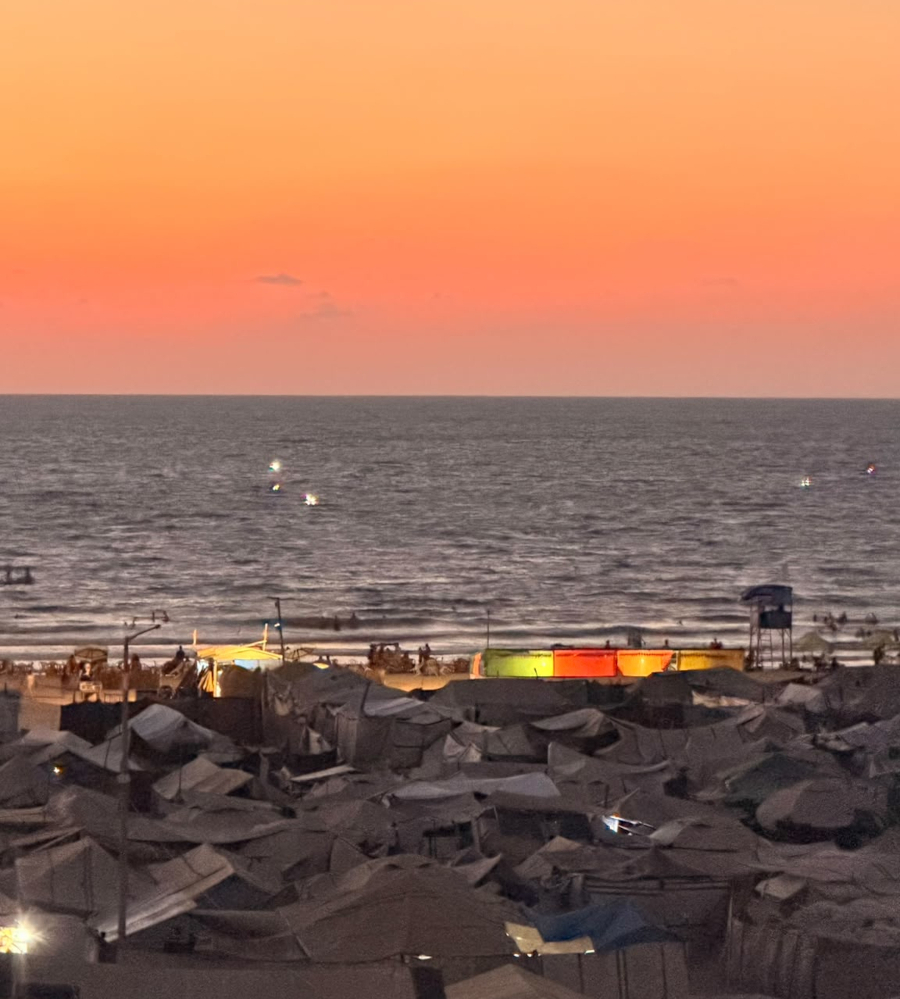
Before Gaza became breaking news on television, it was, for me, a place of life. It was the streets I knew, the faces I used to meet, and the memory that shaped my language, my personality, and my first questions. It was home, friends, and family. It was also the place where I learned that writing is not a luxury, but a way to understand the world and hold on to it.
But war changed the meaning of things. Distance between people is no longer measured in kilometres, but in fear for them. An ordinary message is no longer ordinary; it may become proof that someone is still alive. And the question “How are you?” is no longer casual, because answering it may require explaining an entire life of fear, waiting, and loss.
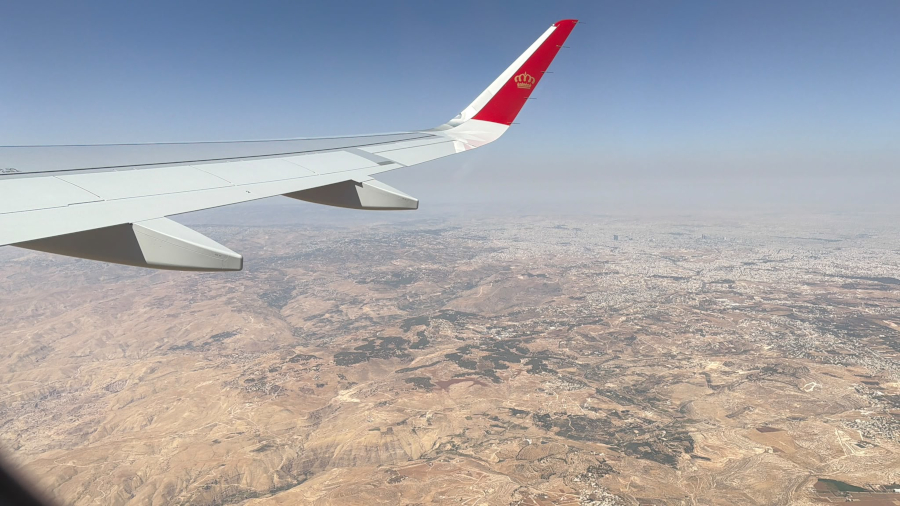
I left Gaza, but leaving did not mean separation. Sometimes a person feels they leave a place only with their body, while their soul remains suspended in everything they left behind. My mother remained there. People I love remained there. And many things I could not carry with me remained: photographs, places, sounds, and memories that cannot fit into a suitcase.
Arriving in Italy did not erase what happened, nor was it a fresh start disconnected from everything before. It was a difficult transition from one place to another, from a life threatened by danger to a new life that is not free from anxiety. Even in the quietest moments, part of me remains there, following the news, waiting for a message, counting the time between one call and the next.
From Architecture and Journalism to Peace Studies
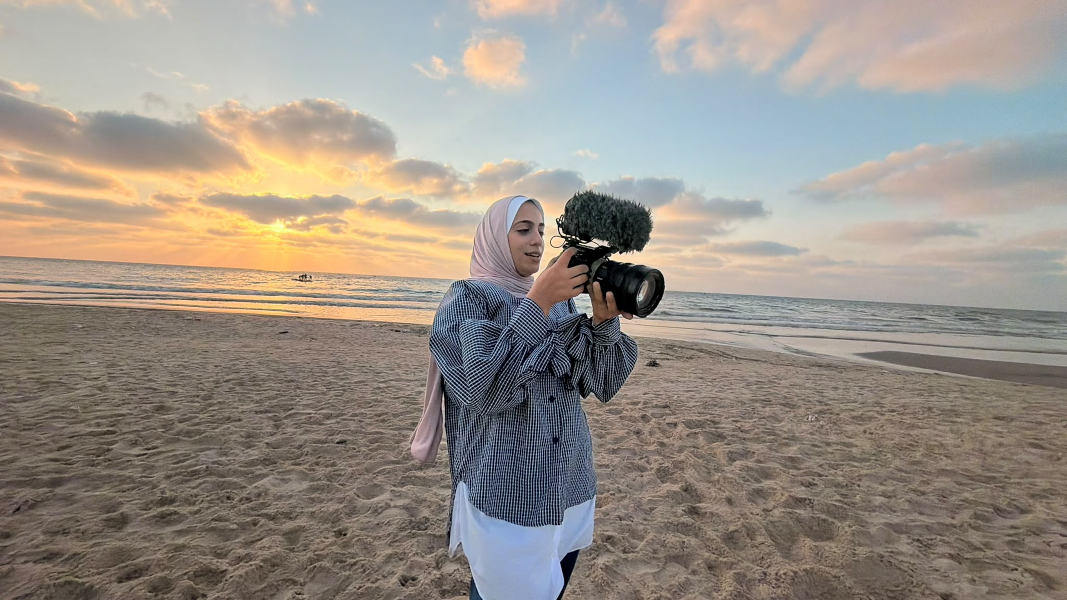
I came to this program from the worlds of journalism and architecture, from spaces where I tried to write about Gaza not as a breaking headline, but as homes, faces, memory, and daily life. In journalism, I searched for language that gave people their right to be told as they are—not as numbers, not as passing images, not as nameless victims.
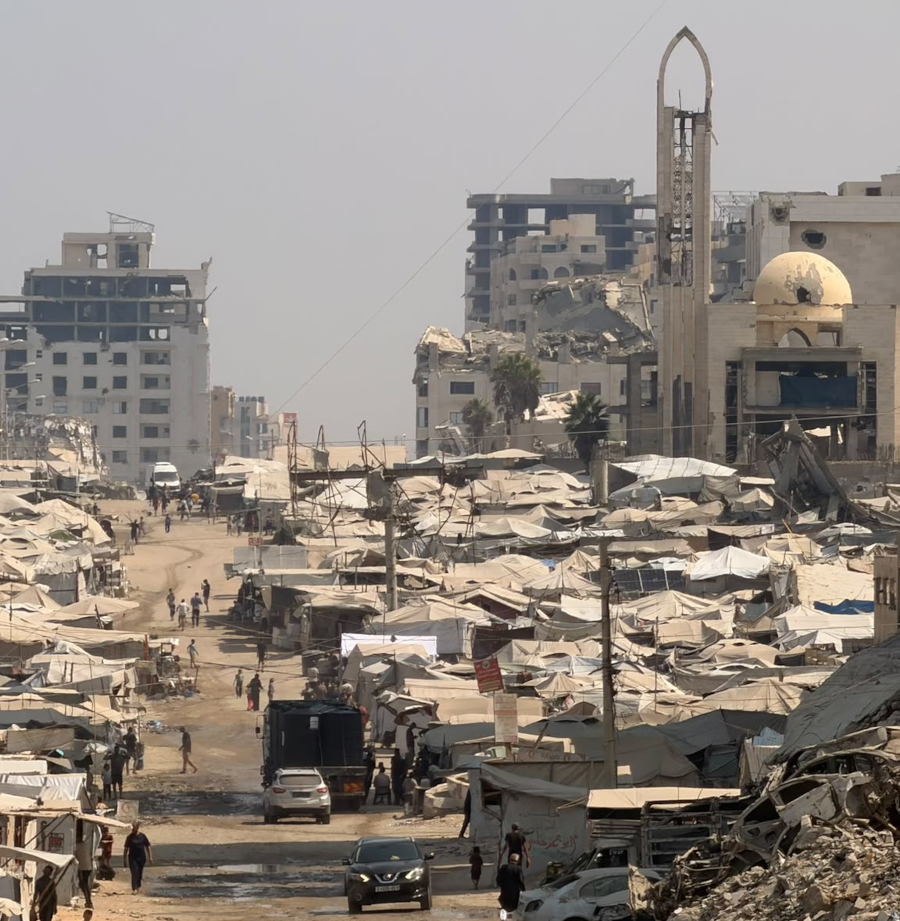
In architecture, I learned to see space as something that shapes human life. I studied how buildings, streets, and neighbourhoods affect the way people live, meet, and remember. But in Gaza, I saw how war destroys not only structures, but the very possibility of space as a place of safety and belonging. I watched homes I had studied and drawn reduced to rubble in seconds. I learned that architecture without justice is incomplete, and that peace is not only the absence of bombs, but the presence of conditions that allow people to build, live, and belong.
In times of war, journalism becomes more than a profession. It is an attempt to resist erasure. When cities become numbers, journalism tries to restore their names. When news reports reduce people’s lives to counts of dead and injured, the journalist insists that behind every number is a story, a family, a memory, and a future that could have been.
But journalism, however necessary, cannot answer all questions alone. It asks: What happened? Who was harmed? Who remains? What story did not reach the world? How do we prevent reducing people to their suffering?
Peace Studies expands these questions: Why did the conflict erupt? How does it continue? What forces feed it? How are civilians affected? What can help communities move from war to recovery? These questions do not cancel journalism; they give it broader context and help the journalist see beyond the immediate event.
Journalism taught me to approach conflict through people’s voices: through a destroyed home, a mother waiting for her son, a child trying to remember what their school looked like before it was erased. Peace Studies invites me to widen the question: What makes these stories repeat? How does tragedy transform from an individual incident into a continuing structure? How can knowledge help prevent conflict, not just describe it after it happens?
I remember a little girl wearing a green dress decorated with flowers. She came from the bombing of Mustafa Hafiz School. She was screaming, and people were saying she was fine. But when one of her relatives lifted her, her dress rose, and the shrapnel holes in her back became visible. She needed urgent surgery, and I had to tell the medical team what I saw. Her image stayed with me: a child in a colourful dress, a body carrying the marks of a war she did not choose. I wrote because I wanted to tell the European reader: Do not look at us as numbers. We have names, homes, memories, and dreams. Our children are not born knowing war. They love bicycles, colourful clothes, and playing in front of their homes, just like your children.
Why Did I Choose to Study Peace?
I chose to study peace because I do not want to remain at the level of describing tragedy, however necessary that description may be. I want to understand conflict at its roots, and to learn how societies move from war to recovery, and how cooperation, development, and justice can be part of building peace—not just slogans said after the fighting ends.
The Peace Studies program at the University of Pisa gives me the opportunity to look at conflicts from multiple angles, and to link conflict transformation with development cooperation. This matters to me because peace is not only the absence of bombing. Peace also means that a person can learn, work, live in a safe home, access healthcare, and plan for their future without having to think about the possibility of losing it at any moment.
A destroyed city cannot be rebuilt with concrete alone. Reconstruction needs schools, hospitals, institutions, jobs, trust, justice, and space for people to tell what happened to them and participate in shaping what comes next. Therefore, studying peace, for me, is not studying an abstract concept far from reality; it is an attempt to understand the conditions that make life possible again.
I know the university will not offer quick answers to everything happening in Gaza. I do not expect to find in books a ready-made recipe for ending wars. But I believe knowledge gives us better tools for understanding and action, and prevents us from settling for astonishment or helplessness. When we understand how conflict begins and continues, we can think of different ways to confront it.
The University as a Space for Listening
In Pisa, the university seems part of daily life. Students in the squares, discussions in lecture halls, books in libraries, and different languages meeting in one place. This scene is new to me, but it raises an old question: What is the function of the university in a world full of wars?
The university may sometimes seem like a place separate from the crises happening outside it, but knowledge does not live outside reality. Every discussion about peace, every lesson about conflict, every question about justice is connected to people who are now living the consequences of political, military, and economic decisions.
The university is not only a place to obtain a degree. It is a space to learn listening, to review ideas, to face complexity, and to discover that the world cannot be reduced to a single narrative. In a university city like Pisa, I find the opportunity to meet people from different backgrounds, each carrying their own perceptions of war, justice, and peace. This meeting does not erase differences in experience, but it opens the possibility of dialogue.
For me, dialogue does not mean ignoring pain or placing all parties on the same moral distance. It means searching for language that preserves people’s humanity, confronts injustice, and prevents difference from turning into hatred or denial. Peace cannot be built with language that dehumanizes others, just as justice cannot be reached by erasing victims’ experiences.
A Message to My Fellow Students
To my colleagues in Pisa, whom I meet at the beginning of a new academic year, I say that the world we study is not far from the world we live in. Wars in the news may seem geographically distant, but they are not far from universities, cities, and communities. Their effects reach families, migration, the economy, language, relationships between people, and even the questions students ask in their classrooms.
I do not ask anyone to carry Gaza’s experience as I carry it; that is not possible. But I ask that we look at the news more slowly, and remember that every number is a human being, and every image has a life before and after it. I ask that we pay attention to the words we use, because language can be a means of understanding, and it can also be a means of erasure and incitement. And I ask that we make space for voices that do not always reach the major platforms.
Perhaps none of us can stop a war, but we can learn how to understand it. We can reject language that justifies erasing human beings. We can seek knowledge instead of repetition, dialogue instead of closure, and justice instead of settling for sympathy. In the end, this may be one of the university’s roles: to make us more able to see the world, and more prepared to take responsibility toward it.
Starting Again Without Forgetting
I arrived in Pisa only two weeks ago, and I am still learning the names of the streets, the university halls, and the faces of my classmates. I am still discovering the city step by step, trying to find a place for myself in a new life. But I know one thing: I did not come here to close the page that began in Gaza.
I came to carry it to another place, to read it from a new angle, and to search for words and tools that make testimony a beginning for understanding and action, not just a painful trace of war. I came to study peace, not because I live far from conflict, but because I know, more than ever, what its absence means.
In Gaza, my mother and my loved ones are still waiting for safety. And I am here, in a quiet university city, beginning my studies and trying to learn. There may seem to be a vast difference between the two places, but they meet inside me. Every lesson about peace returns me to their question, and every page I write reminds me that knowledge has no value if it does not help us protect human beings.
Perhaps I cannot now change the reality of Gaza, nor do I have a complete answer about the way out of war. But I can continue writing, continue learning, and refuse to let my country be reduced to images of destruction alone. I can say that Gaza is not only a place of war; it is also a place of life, memory, education, love, and dreams.
And from Pisa, I try to begin a new chapter without forgetting the chapter I came from.
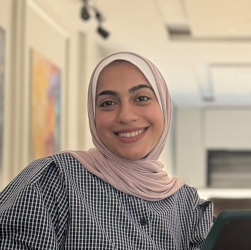
My ambition has always been greater than the boundaries of the place where I grew up, but I did not reach this moment alone. Without my mother, without her support that accompanied me from the first day of my life, without her dedicating all her love, time, and effort so I could continue my path, I would not be the woman standing here today. She believed in me even in moments when I doubted my ability, and pushed me forward when fear weighed down my steps. And I am still, despite distance, war, and absence, that little girl who lifts her head toward her dream, and walks toward it with confidence that resembles my mother’s hand supporting me in my first steps.