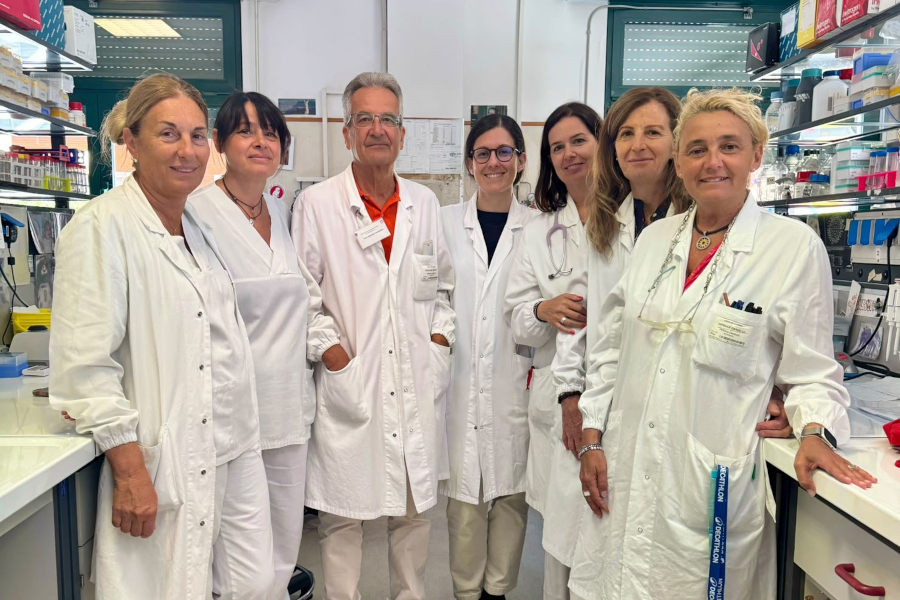


A study conducted by researchers from the University of Pisa and professionals from Pisa University Hospital (Azienda Ospedaliero-Universitaria Pisana, AOUP), in collaboration with colleagues from the University of Pavia, and published in the journal Environmental Pollution, sheds new light on the effects of PFAS (environmental contaminants) on thyroid function and the peripheral action of thyroid hormones. The findings show that these substances may cause hypothyroidism and impair the normal development of brain cells.
The study, entitled “A double endocrine-disrupting effect of PFAS on intra- and extra-thyroid targets: inhibition of iodide uptake and interference with MCT8-mediated T3 transport in vitro”, was carried out using in vitro cellular models under the coordination of Massimo Tonacchera, Associate Professor of Endocrinology at the University of Pisa (Department of Clinical and Experimental Medicine) and a member of the Endocrinology 1 Unit at AOUP. Conducted as part of the PRIN 2022 project “The impact of endocrine disruptors on thyroid cell metabolism, inflammation, cancer, and brain thyroid hormone action mediated by MCT8”, the research demonstrated that these contaminants interfere both with iodide uptake by the thyroid gland and with the uptake of thyroid hormones by neurons and glial cells in the brain.