

The University of Pisa has secured €300,000 in funding from the European Commission for BRIGHT-NIGHT, the European Researchers’ Night, a long-standing science communication event that will take place simultaneously in Pisa, Florence and Siena on Friday 25 September 2026.
The funding, awarded for the period 2026–2027, recognises all partners involved in the BRIGHT-NIGHT project, which brings together the leading universities and research institutions in Tuscany.
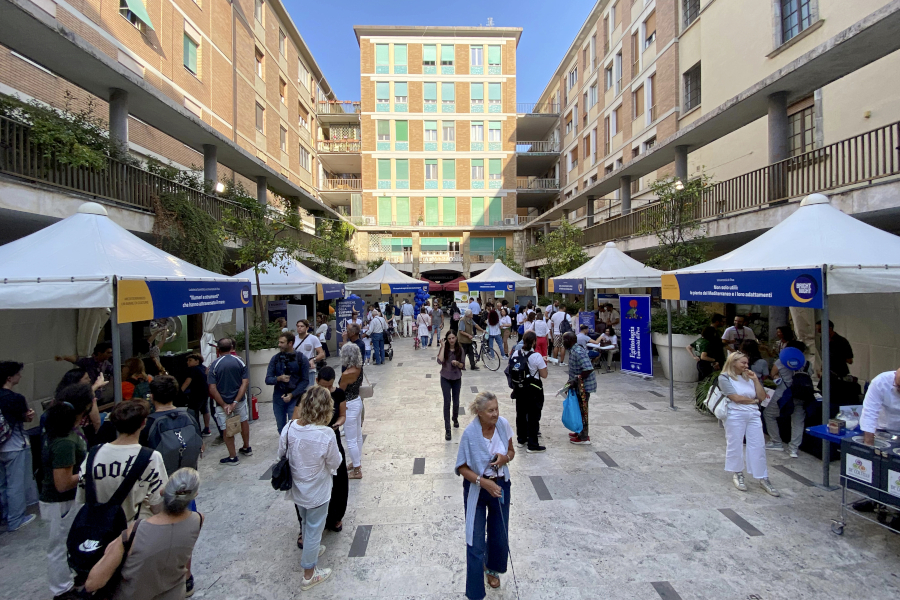
During Bright Night, city squares, museums and universities are transformed into true hubs of science, hosting experiments and demonstrations. This provides an opportunity for the public to immerse themselves in the world of science and research and discover the work of researchers. In the previous edition, over 2,000 students took part in dedicated activities at more than 200 events organised in Pisa alone.
“We are very pleased with this result, which confirms the strength of collaboration between universities and research centres in Tuscany,” said Vittoria Raffa, Rector’s Delegate for Life Sciences Research and scientific coordinator of the BRIGHT-NIGHT project. “This initiative is a fantastic opportunity to make research more accessible to citizens, engage younger generations and show how important the work of researchers is in tackling the major challenges facing our society.”
The project is among 49 selected across more than 40 countries under the Horizon Europe – MSCA and Citizens programme, dedicated to the European Researchers’ Night.
The BRIGHT-NIGHT project is coordinated by the University of Pisa and promoted in collaboration with the University of Florence, the University of Siena, the University for Foreigners of Siena, the Scuola Superiore Sant’Anna, the Scuola Normale Superiore, and the IMT School for Advanced Studies Lucca, as well as the National Research Council (CNR), the National Institute for Nuclear Physics (INFN), the National Institute of Geophysics and Volcanology (INGV), the European Gravitational Observatory (EGO), and the National Institute for Astrophysics – Arcetri Astrophysical Observatory (INAF-OAA). The project is supported by the Tuscany Region within the framework of Giovanisì, the regional programme for youth autonomy.