


Tiny digital needles can be inserted under the skin in a painless and minimally invasive way to detect real-time information about the body’s biochemical state, such as glucose concentration, pH levels, or the presence of specific enzymes or proteins. The needles switch “on” or “off” depending on the presence and concentration of the substance they are designed to detect, forming a QR code that can be scanned using a smartphone app. This makes it possible to immediately determine the concentration level of the target substance.
This represents the latest frontier in precision medicine, developed in the laboratories of the Department of Information Engineering at the University of Pisa by the research team led by Giuseppe Barillaro. The study has been published in Advanced Materials. Within the European project ALERT, coordinated by the University of Pisa, researchers are using microneedle technology to detect Alzheimer’s biomarkers many years before the onset of symptoms.
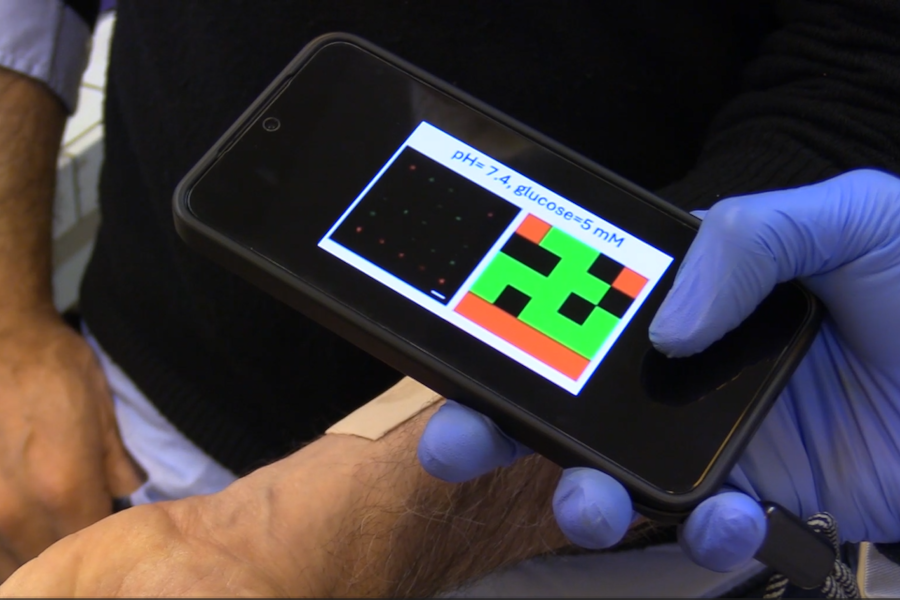
“Real-time biochemical detection is essential for personalised and precision medicine,” explains Giuseppe Barillaro, Professor of Electronic Engineering at the University of Pisa. “However, current implantable biosensors are difficult to use for real-time monitoring in humans, as they require careful calibration and can typically detect only one parameter at a time. Our study instead proposes digital fluorescent microneedles arranged in multiple lines forming a matrix, each with only two possible states: on or off. Each needle has a different threshold value and switches on when it detects a concentration of the target substance above that threshold — for example glucose or pH. This eliminates the need for calibration. The resulting pattern of activated and deactivated needles forms a QR code that can be scanned via an app, providing direct information on the concentration of the substances being measured. Moreover, each needle can be designed to detect a different substance, making it possible to analyse multiple parameters simultaneously, such as glucose concentration and pH levels.”
“This digital encoding, which is more robust than current analogue methods,” adds Farbod Abazar, PhD candidate and first author of the study, “can be widely extended to different probes and biomarkers. Within the ALERT project, we are developing it to detect Alzheimer’s biomarkers — enzymes and proteins that may be present in the body up to twenty years before symptoms appear — enabling early and minimally invasive diagnosis and intervention. The project has just begun and involves, in addition to the University of Pisa, the company ab medica, the Charité University Hospital in Berlin, and the Universities of Modena and Reggio Emilia and Dublin.”
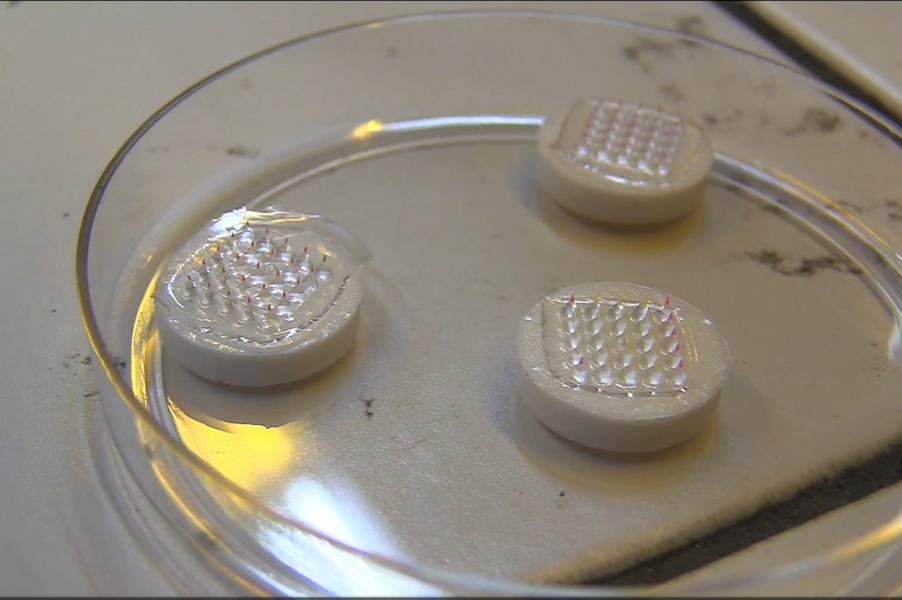
The QR code generated by the microneedles provides a direct and quantitative representation of biochemical information, facilitating decentralised and wearable diagnostics and personalised medicine. The technology also offers broad potential for medical applications, including early diagnosis of cancer, sepsis and infectious diseases, as well as applications in environmental monitoring, precision agriculture and food safety.
The company ab medica, which has long collaborated with researchers in Pisa, is ready to invest in this technology to bring it to market.
“For ab medica,” says Cosimo Puttili, Director of Research and Innovation, “ALERT represents the natural evolution of a scientific collaboration that began more than three years ago with Professor Barillaro’s team. We are ready to invest our expertise and resources to transform this technology into a truly innovative product for prevention and care.”