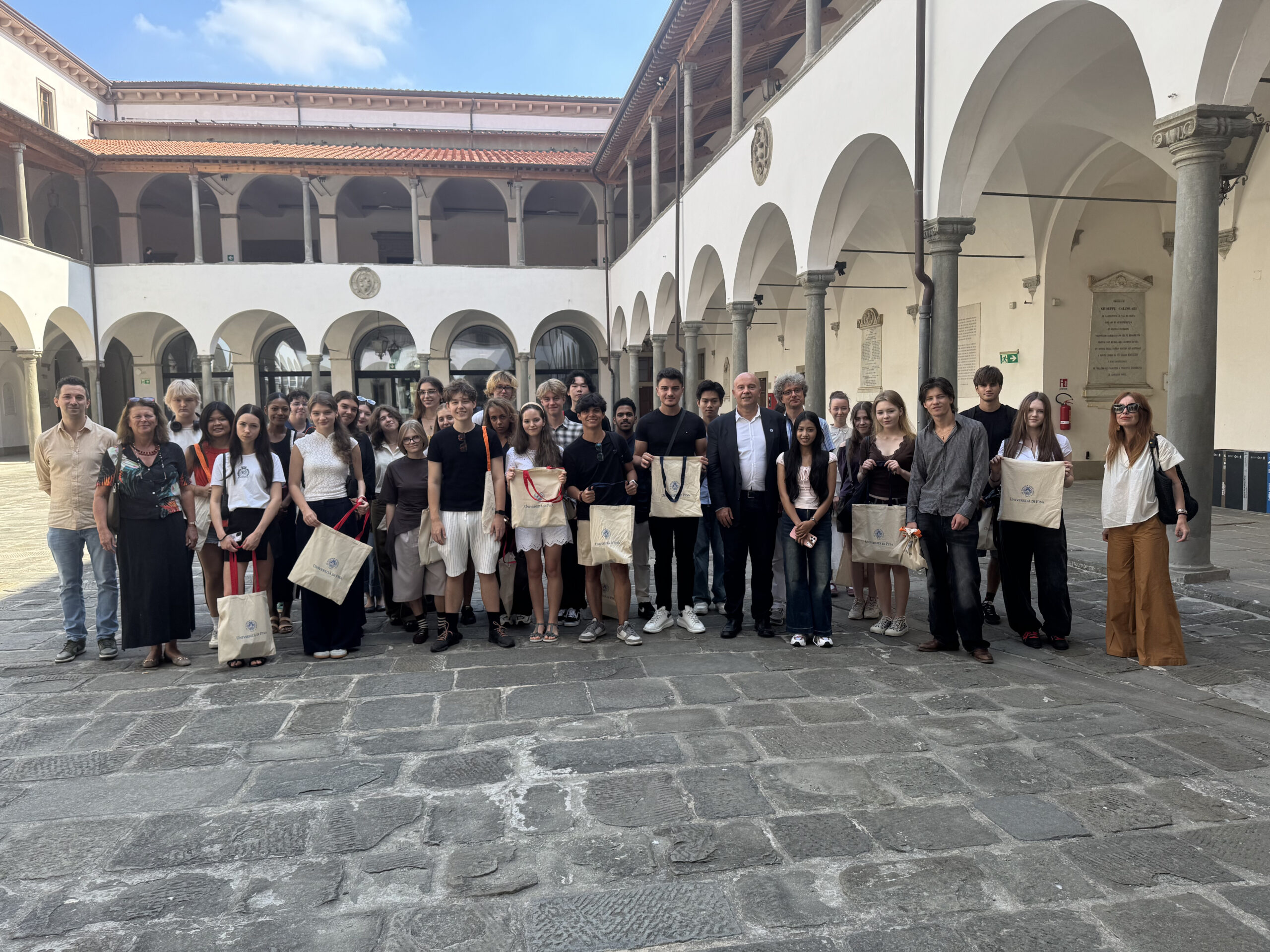


The two winners of the latest SPARK Pisa Proof-of-Concept (PoC) call for proposals are RECAST, coordinated by Professor Sabrina Taliani of the Department of Pharmacy, and Vi3Dgo, coordinated by Professor Paolo Neri of the Department of Civil and Industrial Engineering. SPARK Pisa is the University of Pisa programme that supports the development of innovative technologies and solutions with high application potential in the medical, pharmaceutical and diagnostic sectors.
The two selected projects address important challenges in healthcare and clinical practice: on the one hand, improving our understanding of the mechanisms of action of one of the most important classes of drugs used in the treatment of heart failure; on the other, developing innovative digital tools for monitoring dermatological conditions.
Established in 2019 as the first Italian node of the international SPARK Global network, founded by Stanford University and now comprising more than 50 academic institutions worldwide, SPARK Pisa funds innovative research projects developed by University of Pisa research groups with a Technology Readiness Level (TRL) between 3 and 5. The programme supports the journey from early-stage concept to functional prototype and facilitates the subsequent transfer of technologies to industry and the market.
SPARK Pisa supports the development of new therapies and technologies, diagnostic solutions addressing unmet medical needs, and computational approaches applied to systems pharmacology, systems medicine and nutrition. Its objective is to promote translational research and accelerate the transfer of academic discoveries into concrete solutions that benefit patients and society.
“With SPARK Pisa, we bring academic research closer to patients by supporting the development of health technologies and new medicines in areas where unmet medical needs still exist. The University of Pisa is proud to be part of SPARK Global, an international network involving more than 50 academic institutions worldwide. Projects funded in Pisa have already generated patents and highly promising solutions, and we hope that the two new projects supported this year will follow a similar path,” comments Corrado Priami, Vice-Rector for Knowledge Enhancement at the University of Pisa.
RECAST: a new tool for understanding how gliflozins work in heart failure
The objective of the project coordinated by Professor Sabrina Taliani, conducted in collaboration with the research group led by Dr Luca Menichetti, Senior Researcher at the Institute of Clinical Physiology of the National Research Council (CNR) in Pisa, is to develop an innovative PET tracer designed to quantitatively assess tissue distribution and clarify the mechanism of action of an antidiabetic drug approved for the treatment of heart failure that belongs to the gliflozin class.
Heart failure remains one of the major challenges in cardiovascular medicine, and its clinical management relies on several pharmacological therapies aimed at improving cardiac function and clinical outcomes. Among these, gliflozins represent one of the most significant innovations of recent years, having demonstrated reductions in morbidity and mortality even in non-diabetic patients.
Despite the clinical benefits observed, diagnostic tools capable of clarifying their mechanism of action at the myocardial level are still lacking. RECAST aims to fill this gap through an advanced imaging platform that may contribute to a better understanding of cardiometabolic processes and, in the future, support the development of new diagnostic strategies and personalised therapeutic approaches.
Vi3Dgo: digital technologies for monitoring dermatological conditions

The second selected project is Vi3Dgo, coordinated by Paolo Neri in collaboration with Giovanni Menchini, Scientific and Medical Director of the Dermacademy Institute in Pisa.
The project aims to develop an innovative solution to support the monitoring of visible dermatological conditions, with particular attention to assessing their clinical evolution over time.
The objective is to contribute to making follow-up procedures more objective, reproducible and easier to document, providing healthcare professionals with a tool to support clinical assessment and patients with greater awareness of their treatment journey.
The potential impact extends to both the clinical and socio-economic spheres. Vi3Dgo responds to the growing demand for non-invasive digital technologies aimed at personalised medicine, the standardisation of clinical data and the improvement of quality of care. In the longer term, the project’s results may support new applications in dermatology, clinical research and healthcare innovation.