

There are 201 granite columns in Pisa, located mostly in medieval buildings (10th–12th centuries) — an architectural presence that reflects the city’s political and economic power. Pisa ranks second only to Rome and Istanbul in the number of granite shafts, far ahead of its rival Genoa, which has only 32. Some of these are spolia, granite columns reused from Roman buildings; others were produced specifically for the city’s flourishing medieval construction sites. This new perspective on Pisa’s history comes from a study published in the journal Archaeological and Anthropological Sciences, authored by Claudia Sciuto of the MAPPA Lab in the Department of Civilisations and Forms of Knowledge at the University of Pisa, together with Valérie Andrieu and Pierre Rochette of Aix-Marseille University and the CNRS.
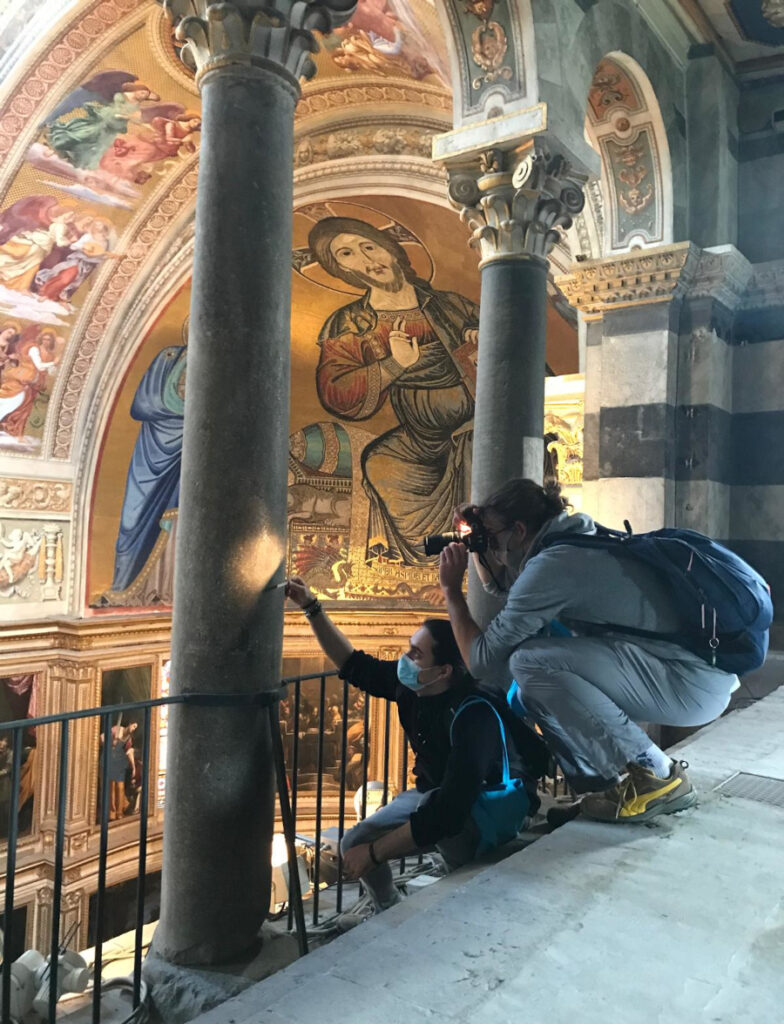
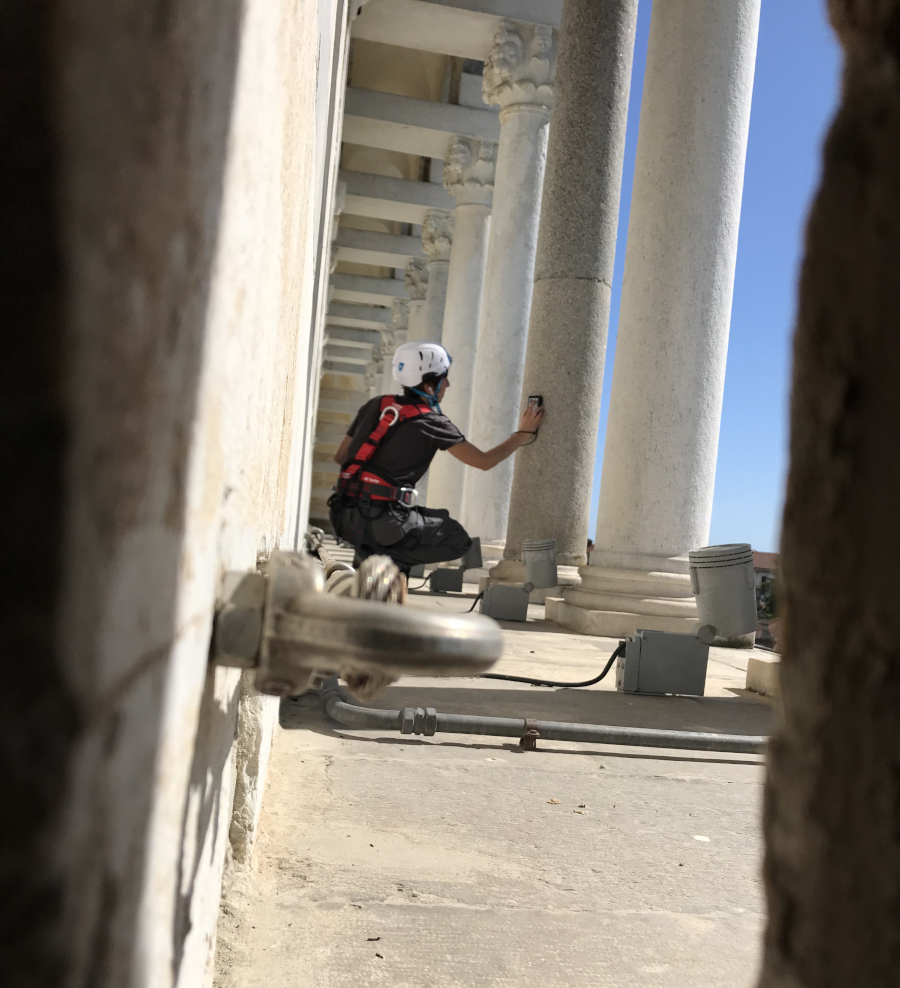
The heart of this stone heritage lies in Piazza dei Miracoli. The Cathedral alone contains 108 columns, many of them tall and massive, marked by the typical granite tones ranging from grey to pinkish hues and originating from quarries in the Tyrrhenian islands, the Anatolian peninsula and Egypt. The Leaning Tower also contributes to this mosaic: at the base of the bell tower, the survey identified six granite shafts.
“The use of spolia had an intentional symbolic value: it linked Pisa to the legacy of Rome and displayed the city’s economic and naval strength,” Sciuto explains. “But granite columns were also important because they represented a resource that was difficult to obtain and a powerful political symbol. Quarrying granite required complex extraction, demanding transport and great technical skill — so much so that the recovery and lifting of the shafts were celebrated in medieval sources, such as in Buscheto’s epitaph on the façade of the Cathedral.”
Pisa’s 201 columns thus reflected the city’s ability to control territories and trade across the Mediterranean. Some originated from quarries on Elba, Corsica and Sardinia. These columns are largely homogeneous in material and size — a sign of coordinated production specifically for Pisa’s construction sites. Alongside these are the spolia, taken from reused Roman buildings, which could come from much greater distances, particularly Turkey and Egypt. Compared with quarried columns, spolia are distinguished by their greater variability in dimensions, with irregular heights and diameters reflecting their origins in different structures — making them immediately recognisable as reused elements.
“We carried out the fieldwork in 2022 over a period of two months,” Sciuto continues. “It was not a simple task: identifying and analysing all the visible and accessible granite columns in the city. We used a non-destructive analytical technique that allows for rapid and precise identification of granite provenance — a method that had never been applied before on an urban scale nor integrated with a historical-archaeological reading of the entire monumental context.”
The research was conducted as part of the project “Le città invisibili”, funded through the 2018–2022 Department of Excellence programme of the Department of Civilisations and Forms of Knowledge. Special thanks go to the restorers of the Opera del Duomo and to the Archaeology, Fine Arts and Landscape Heritage Authority for the provinces of Pisa and Livorno.