
The scientific mission of the Department of Earth Sciences of the University of Pisa in the Sultanate of Oman has recently come to an end: Professors Adriano Ribolini and Eusebio Stucchi conducted geophysical surveys at the Khor Rori archaeological site in the Dhofar region (southern Oman), which has been a UNESCO World Heritage Site since 1998. The DHOMIAP Project is active in this area, with the aim of investigating the human-environment framework in the Dhofar region to reconstruct the settlement dynamics, spatial distribution, and relationships between the inhabitants of the area in pre-Islamic times.
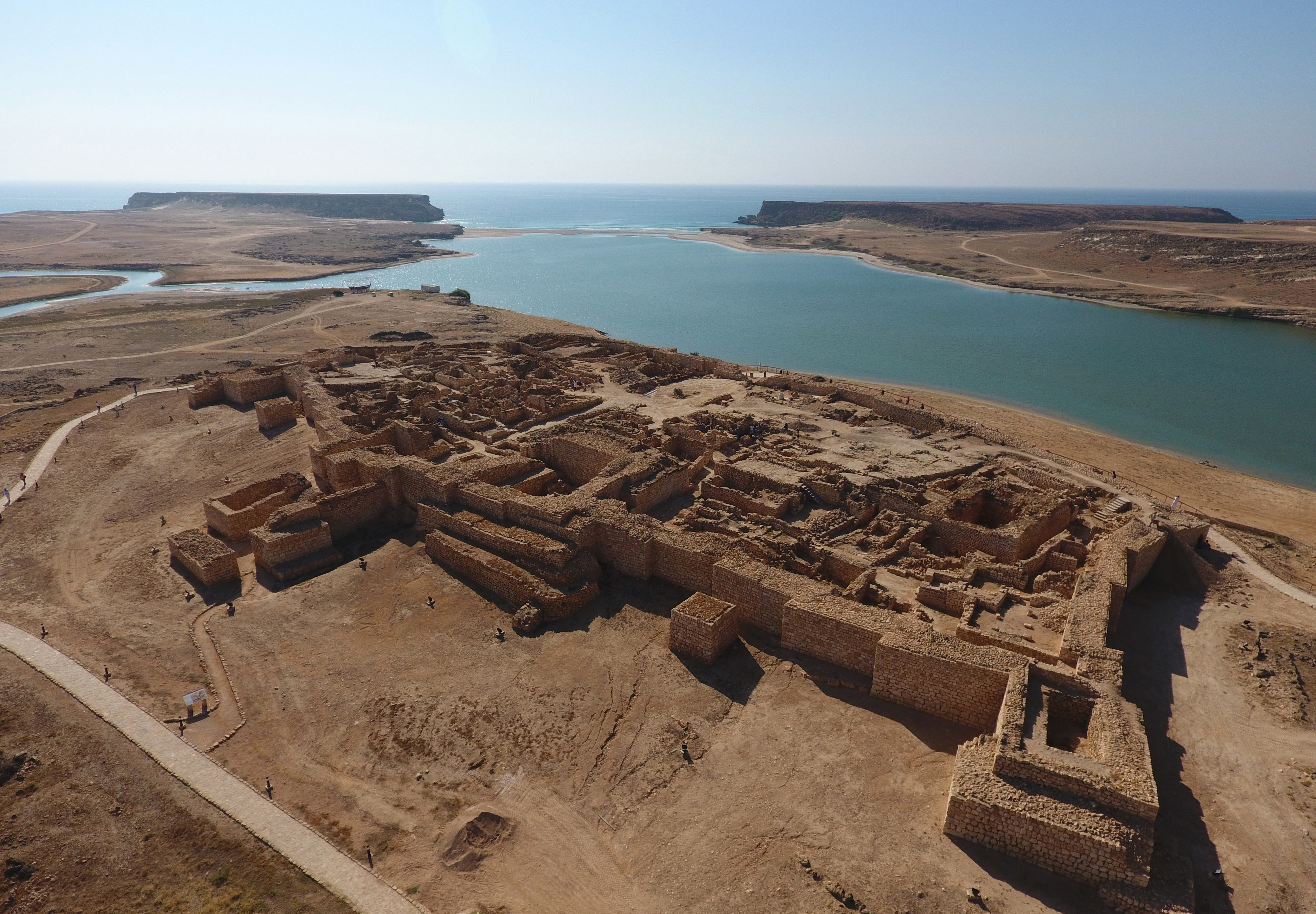
“The DHOMIAP Project continues the long tradition of archaeological studies carried out by the University of Pisa in this area of Oman,” comments Silvia Lischi, the archaeologist in charge of the project, who holds a PhD from the University of Pisa and is currently a post-doctoral student at the Sorbonne in Paris. “The aim of these investigations is to identify buried structures dating back to the first phase of settlement of South Arabian people in the Khor Rori area. This period precedes the maximum expansion of the coastal city of Sumhuram (Late Iron Age) and coincides with the intensive use of the area by the indigenous population related to the Dhofar Coastal Culture”.

“For our surveys, we used a ground-penetrating radar and a differential magnetometer (Gradiometer) with which we explored the first metres of the subsurface in search of remains of potential archaeological interest, particularly wall structures compatible with a stable settlement,” explains Adriano Ribolini. “The data collected are currently being processed at the Georadar Laboratory and the Geophysics Laboratory of the Department of Earth Sciences,” adds Professor Eusebio Stucchi. “The first radar images (reflection amplitude maps) show the presence of geometric figures which correspond to wall structures with a thickness of several decimetres,” concludes Adriano Ribolini.
The mission results could provide new insights into the relationship between the indigenous coastal population of Dhofar, settled on the Inqitat promontory, and the exogenous population from the South Arabic Kingdom of Hadramawt, based in Sumhuram.