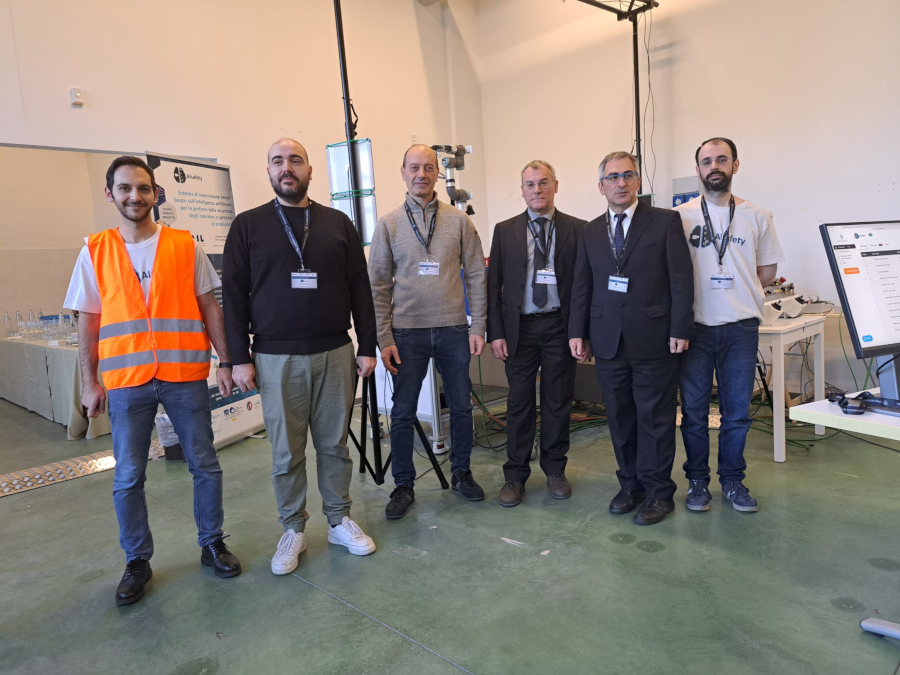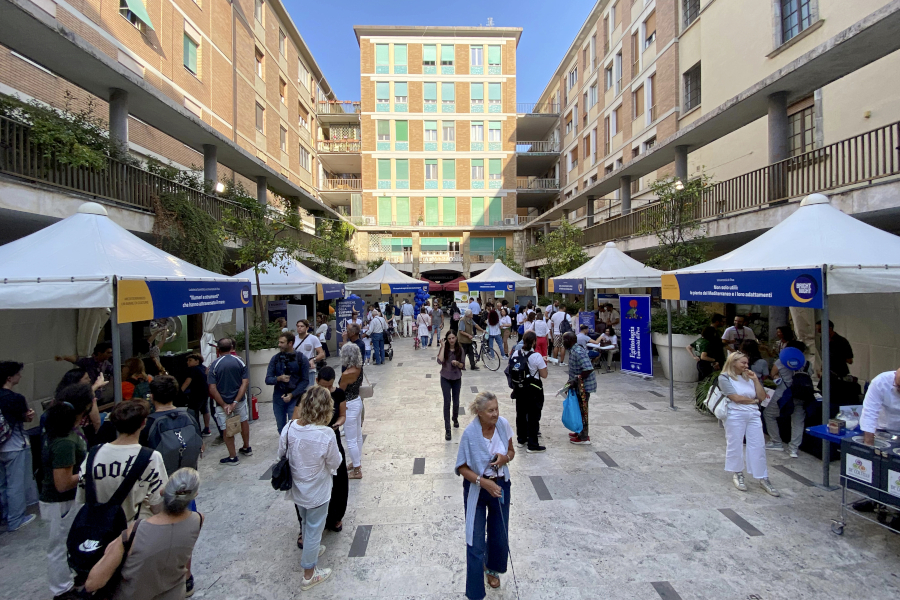


On 3 December, the University of Pisa presented AISAFETY, a supervision system that combines sensors, cameras and artificial intelligence to enhance the safety of workers operating machinery and production systems. At the Navacchio Technology Park, a small production setup — consisting of a lathe and a robot — was installed to demonstrate the new system.
“In industrial settings,” explains Paolo Nepa, Professor of Engineering in the field of Electromagnetic Fields at the University of Pisa, “many accidents involving machine operators are in some way linked to operator behaviour. AISAFETY can be integrated into existing machinery to reduce risks caused by errors or tampering and to ensure that operators can work safely.”
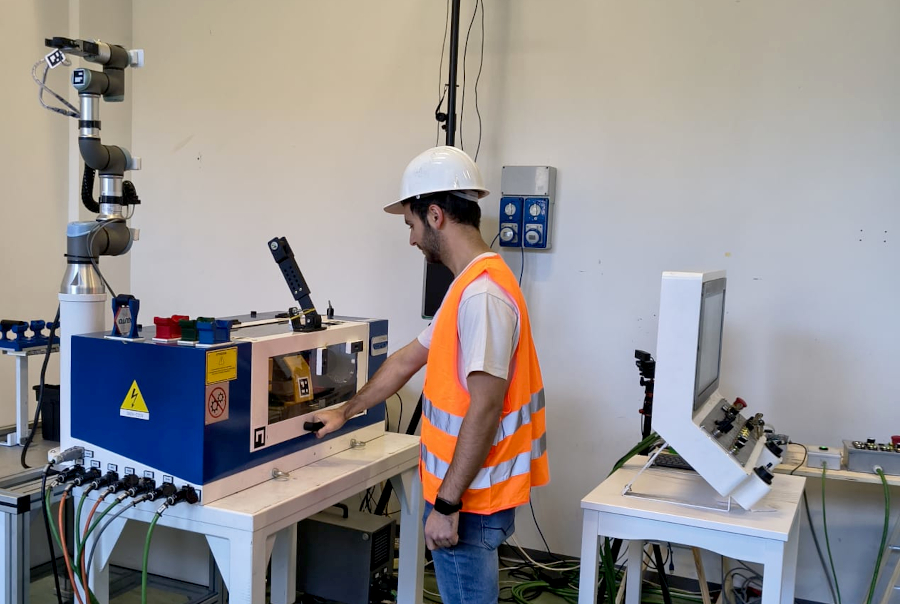
To develop an effective device, the researchers integrated several technologies: a radio-frequency system capable of detecting the positions of people and objects; computer vision to observe and analyse the work area and the machine; and finally an artificial intelligence module that gathers data from the first two components and identifies potential risk situations for personnel linked to errors or tampering.
“In the event of a risk,” says Roberto Gabbrielli, Professor of Mechanical Industrial Plants at the University of Pisa and coordinator of the project, “the AI module activates stop commands on the production system to bring it to a safe state. The supervision system also sends notifications to workers’ smartphones, advising them not to proceed with the operation in order to reduce their exposure to risk.”
The AISAFETY project (“Smart integrated system based on artificial intelligence for managing operator safety in production processes”) is co-financed by INAIL under the BRiC calls, and involves collaboration between the University of Pisa, the University of Perugia and the CNR