

Every year, thousands of tonnes of microscopic cosmic dust fall to Earth, providing scientists with a valuable window into the origin of the Solar System. An international team of researchers, led by Matthias van Ginneken of the University of Kent, has identified a distinctive type of cosmic dust that points to the existence of a primitive near-Earth asteroid previously unrepresented in the world’s meteorite collections. The study, published in Science Advances, reshapes our understanding of the diversity of planetary materials orbiting in our cosmic neighbourhood. The research also involved Professor Luigi Folco of the Department of Earth Sciences at the University of Pisa, who supervised Matthias van Ginneken’s PhD, and Martin David Suttle, a researcher affiliated with the same department.
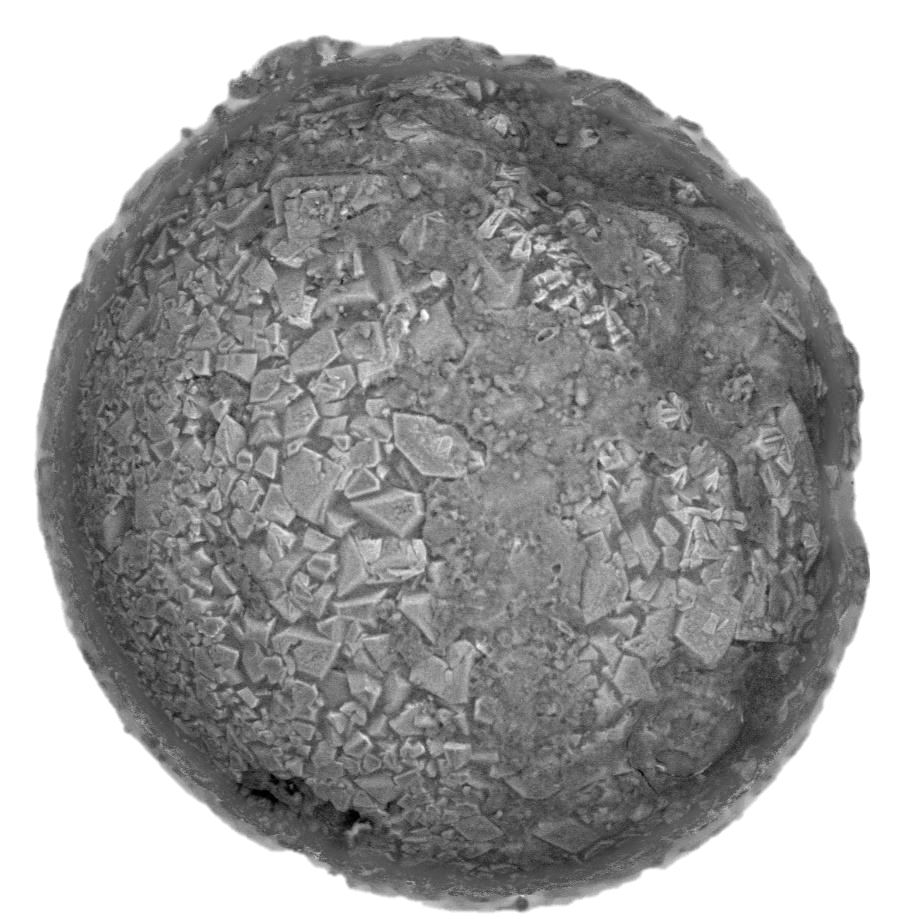
Cosmic spherules are tiny, dust-sized pieces of space rock that melt due to intense friction and heat as they enter Earth’s atmosphere, making up most of the extraterrestrial material reaching our planet. Traditionally, most of this cosmic dust is believed to originate from recent collisions within the Main Asteroid Belt located between Mars and Jupiter. However, by examining an unusual subset of these particles recovered from both Antarctic glacial sediment and urban environments, researchers identified a distinct group with an anomalous chemical and physical makeup.

Crucially, this distinct group exhibits an extreme depletion in the isotope oxygen-16, answering a long-standing question in planetary science. For decades, researchers have been puzzled by a mysterious minority of space dust, representing roughly 10% of all analysed cosmic spherules, that possesses a highly anomalous, 16O-poor signature inconsistent with any known meteorite group in global collections. Long designated by scientists as an isotopically anomalous subtype, their origin and parent asteroid remained an unresolved mystery.
Dubbed “SCumPo” (sulphur-rich cumulate porphyritic olivine) spherules, these microscopic particles completely lack magnetite, which is a common iron oxide mineral that almost always forms when molten space dust particles react with oxygen in Earth’s upper atmosphere. Instead, they are rich with iron-nickel-sulphur droplets. This highly unusual composition shows that the dust melted under extremely reducing conditions, likely shielded by the vaporization of its own volatile gases. Furthermore, the particles possess a striking internal texture where olivine crystals rapidly settled to one side during flight.

By running advanced numerical models of how these crystals settled under immense deceleration, the team calculated that the precursor particles entered the atmosphere at blazing speeds of 14 to 17 kilometres per second. This high encounter velocity indicates a highly elongated, high-eccentricity orbit that is entirely incompatible with typical asteroidal dust bands from the main belt. Instead, the combination of this specific orbital path and a unique chemical fingerprint points directly to a primitive, sulphide-rich near-Earth asteroid closely related to newly identified and rare primitive meteorites.
This discovery is vital for planetary science because it reveals a “missing link” parent body in space. While large meteorites from this specific asteroid type may be too fragile or volatile-rich to survive the violent plunge to Earth’s surface intact, their presence is captured in the continuous, gentle rain of micrometeorites. By studying these tiny space travellers, scientists can decode the history of parts of the solar system that remain otherwise hidden, proving that the interplanetary medium contains primitive matter far more diverse and complex than previously documented.