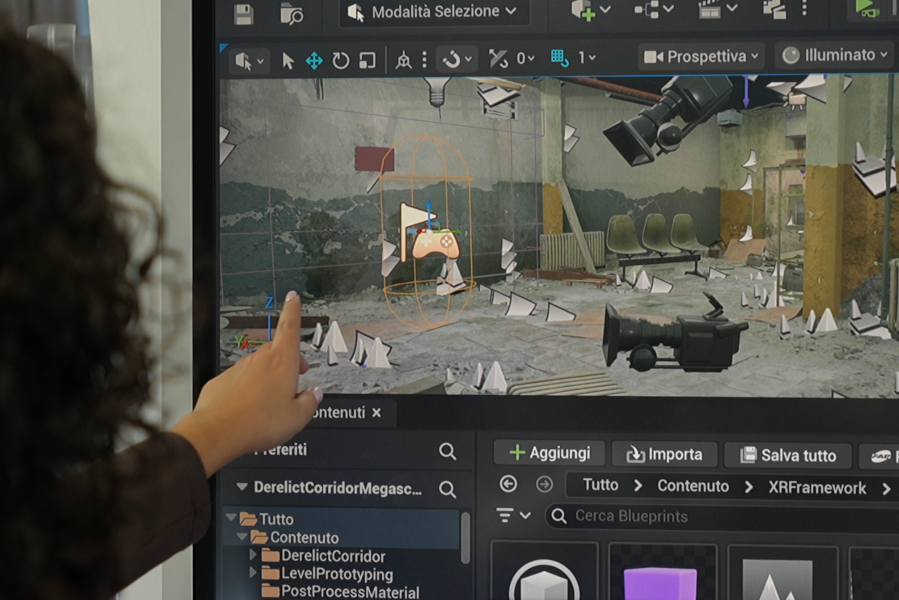


His name is Peter, and he is a virtual spider designed to help treat and diagnose phobias. Developed at the University of Pisa, the tool is freely available for download to support psychologists and clinicians in assessing phobic avoidance, a type of behaviour typically associated with a range of anxiety-related disorders. The tool is open source, and all that is needed to use it is a virtual reality headset.
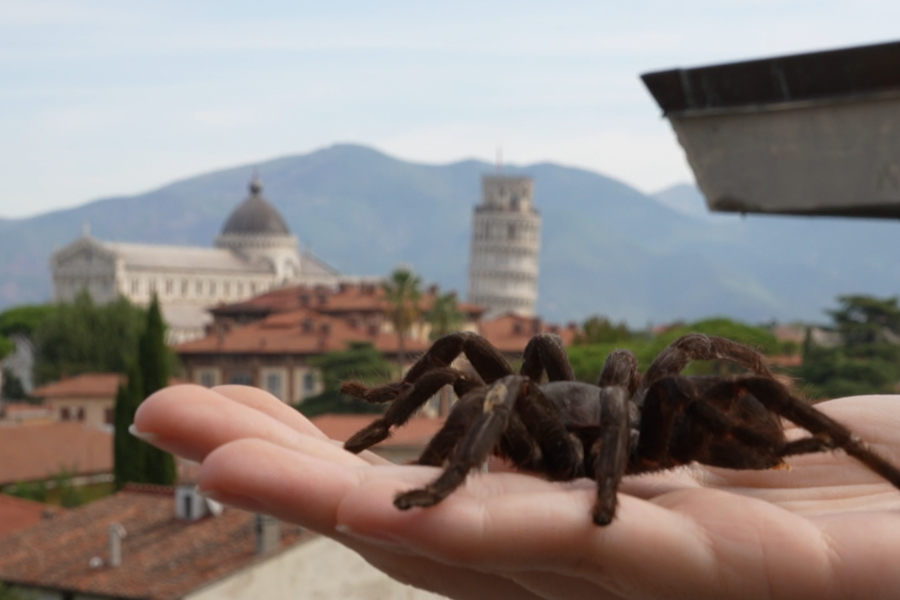
The article documenting the research was published in Communications Psychology, a Nature Portfolio journal, and was written by bioengineers from the University of Pisa’s Department of Information Engineering and psychologists from the Department of Surgical, Medical, Molecular and Critical Area Pathology.
“We created a scenario that exposes people to their fears by recreating in virtual reality a test that has been used since the 1960s, in which people find themselves in a corridor with a large spider at the far end,” explains Sergio Frumento, a researcher in the Department of Information Engineering at the University of Pisa. “Participants in the experiment were asked to get as close to the spider as possible. This allowed us to accurately measure the time taken to complete the task and their walking speed.”

“In addition,” says Alberto Greco, Professor of Bioengineering in the Department of Information Engineering at the University of Pisa, “for the first time, we distinguished between different subtypes of avoidance behaviour. This is highly relevant when it comes to selecting the most appropriate type of treatment for each patient.”
The analysis involved a sample of 75 participants with varying levels of arachnophobia. Based on the paths they followed as they approached the spider, the study identified several types of avoidance that can be associated with different psychological interpretations and, consequently, different treatments.
“The next step will be to integrate the system with the monitoring of physiological signals, such as heart rate, to assess the subject’s anxiety state in greater depth,” concludes Greco.
The tool developed by University of Pisa researchers is freely available for download at: https://doi.org/10.17605/OSF.IO/YN29T