


Artificial intelligence that can support human intelligence without supplanting its role or primacy; a tool that does not serve to conceal or dilute responsibility; human beings as the driving force defining and governing change. These were some of the key messages to emerge from the 16th edition of Internet Festival, which concluded yesterday in Pisa after four days of talks, performances, workshops and installations exploring the relationship between society and innovation. With #Wisdom as its guiding theme, this edition invited participants to reflect not only on the opportunities offered by new technologies, but above all on the responsibility involved in governing them. This common thread linked conversations with Abel, the adolescent robot growing up alongside the Festival, discussions on digital humanism inspired by Pope Leo XIV’s Magnifica Humanitas, and debates on the use of algorithms in armed conflicts. Together, these discussions brought a central issue into focus: innovation must support human decision-making and aim to improve people’s lives and reduce inequalities, rather than widen divides or restrict rights and freedoms.
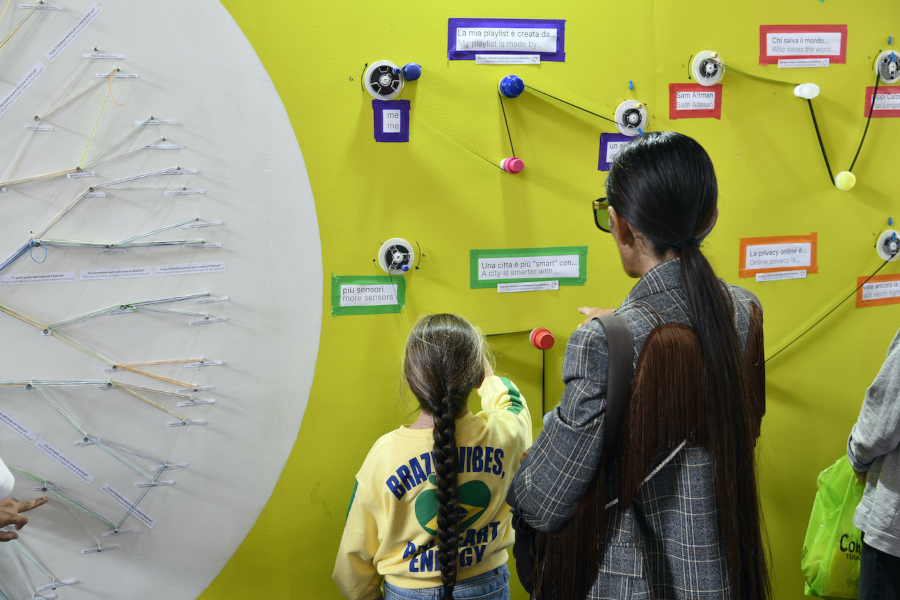
Interest in the themes addressed and in IF 2026’s theatre, music and entertainment events was exceptionally high. While final figures are still pending, several examples illustrate the level of interest: Magnifica Humanitas attracted a standing-room-only audience; Data Conversations received applications from 80 artists under 35 from around the world, and the works of the ten participants who came to Pisa will be exhibited at the Estonian National Museum in 2027; 120 people applied to attend the theatrical performance inside the prison, with 50 members of the public authorised to attend; the performance by French-Moroccan musician Daoud sold out; all 360 tickets for Tintoria Live were sold within hours; and the Circle U. Alliance event, curated by Gian-Luigi Ferrari of the University of Pisa, brought together attendees in person and more than 50 students connecting remotely from the Alliance’s nine European universities. The T-Tours were also fully booked, with 115 classes from across Tuscany taking part between Thursday and Saturday. A further 75 classes from schools throughout Italy—from Palermo to Monza, Naples to Venice, Caserta to Cagliari, and Udine to Cuneo—have already registered for the online T-Tours scheduled to run until December. All available places for the company workshops were also fully booked. They were held at the North-West Tuscany Chamber of Commerce on a dedicated day introduced for the first time at this year’s Festival.
The Pope’s encyclical and the challenge of digital humanism – The centrality of the human person was the focus of the Magnifica Humanitas panel, organised by Regione Toscana and held on Saturday at Le Benedettine. The discussion brought together the Archbishop of Pisa, Saverio Cannistrà; Fosca Giannotti, Professor of Artificial Intelligence at the Scuola Normale Superiore; Alessandra Nardini, Regional Councillor responsible for Education, Schooling and Internet Festival; and Riccardo Zucchi, Rector of the University of Pisa.
The discussion highlighted a strong call for collective responsibility. Cannistrà evoked the image of rebuilding the walls of Jerusalem, while Nardini explained why inclusion, human dignity and the reduction of inequalities must guide major transitions such as the development of artificial intelligence. She stressed the importance of preventing AI from falling under the control of a few and reaffirmed the need for strong public-sector involvement.
The discussion was grounded in the awareness that the challenge addressed by the encyclical today may be even more difficult than that posed by Rerum Novarum. Technological change no longer affects only the mechanisms of production: it extends into decision-making processes, information, education, relationships and even our perception of reality.
Participants discussed the need to regard data and the digital infrastructures that use them as resources of public interest and common goods. This calls for support for public research, shared infrastructures, auditing capabilities and independent access to models, rather than limiting intervention to the consequences of technological development. Action must also be taken while technologies are still being shaped.
When algorithms go to war – The panel Quando gli algoritmi andarono alla guerra (When Algorithms Went to War), featuring Rossella Miccio, National President of Emergency, drew attention to the growing use of artificial intelligence in armed conflicts.
Delegating target identification to an algorithm risks distancing human conscience from the consequences of decisions no longer attributable to human commands. AI does not make warfare more precise; what it certainly does, however, is accelerate target selection and multiply attacks and civilian casualties.
Stroncate Scientifiche: fighting fake news through science and humour – Stroncate Scientifiche, the podcast produced by the Scuola Superiore Sant’Anna, took to the Internet Festival stage with three talks devoted to myths and misinformation.
Lecturers and students explored artificial intelligence, algorithms and the digital world, using the scientific method, critical thinking and humour to challenge widespread beliefs and deliberately oversimplified narratives.
Participants included Davide Manzoni, a bionic engineer and science communicator, in conversation with Emanuele Guerrazzi, Data Engineer at the Scuola Sant’Anna’s EMbeDS, and lecturers Andrea Bertolini and Andrea Vandin, who were joined respectively by students Lorenza Coscia and Matilde Contestabile.
Lysistrata in prison: connection through theatre – For the first time, Internet Festival brought its reflections inside the Don Bosco prison, a place where digital connectivity is, by definition, restricted.
Here, Aristophanes’ Lysistrata was performed by prisoners from the Don Bosco Theatre School, in a production by the theatre company I Sacchi di Sabbia.
Against the backdrop of a present marked by wars and divisions, the comedy revived an ancient yet still relevant question: is it possible to choose a different path?
Bringing the Festival into the prison gave the word “connection” a different meaning, expressing it through theatre, listening and the possibility of building relationships and bringing about change.
Data Conversations: when data emerge from interaction – Throughout the Festival, Data Conversations transformed the Logge dei Banchi and the Le Benedettine Conference Centre into an international creative workshop.
The project brought together ten creative talents under 30 from across Europe, representing Italy, France, the Netherlands, Spain, Austria, Denmark, Germany and Estonia. The young participants took part in an artistic residency devoted to designing new “Info-Experiences”.
Installations, interactive games and sensory experiences overturned the traditional relationship between audiences and data. Information was not passively extracted but generated through movement, interaction with objects and participation.
This produced “living” data, capturing reactions, desires and the real impact of a cultural experience beyond conventional metrics and questionnaires. Here, data collection itself became an artistic, relational and generative act.

A IF il protocollo CNR-RegCNR–Regione Toscana – Educational partnerships also featured at Internet Festival with the signing of the Train the Trainer agreement by Andrea Passarella, Director of the CNR Institute of Informatics and Telematics, Regional Councillor Alessandra Nardini and Luciano Tagliaferri, Director of the Regional School Office.
Developed by CNR-IIT together with the .it Registry’s Ludoteca, the initiative will train teachers in Tuscany in cybersecurity, artificial intelligence and digital citizenship, creating a replicable teaching model to help younger generations protect themselves against online risks.
The final day: from Tintoria to digital bodies – The Festival’s closing day brought Tintoria Live to Teatro Nuovo. The podcast, hosted by Daniele Tinti and Stefano Rapone and co-produced by The Comedy Club, featured Ivano Bisi as the guest of a special episode recorded live.
With more than 300 episodes and over 100 million views and listens, Tintoria is one of the most popular shows on the Italian podcast scene and an example of the forms of expression that have most significantly transformed digital entertainment in recent years.
At Le Benedettine, the panel Corpi digitali. Le regole del gioco nel sex work online (Digital Bodies: The Rules of the Game in Online Sex Work) brought together activist, author and sex worker Elettra Arazatah with Giulia Perrone and Daniele Vaschi.
The discussion focused on the transformation of sex work on digital platforms and the complex interplay between autonomy, identity, rights, protection and the content economy.

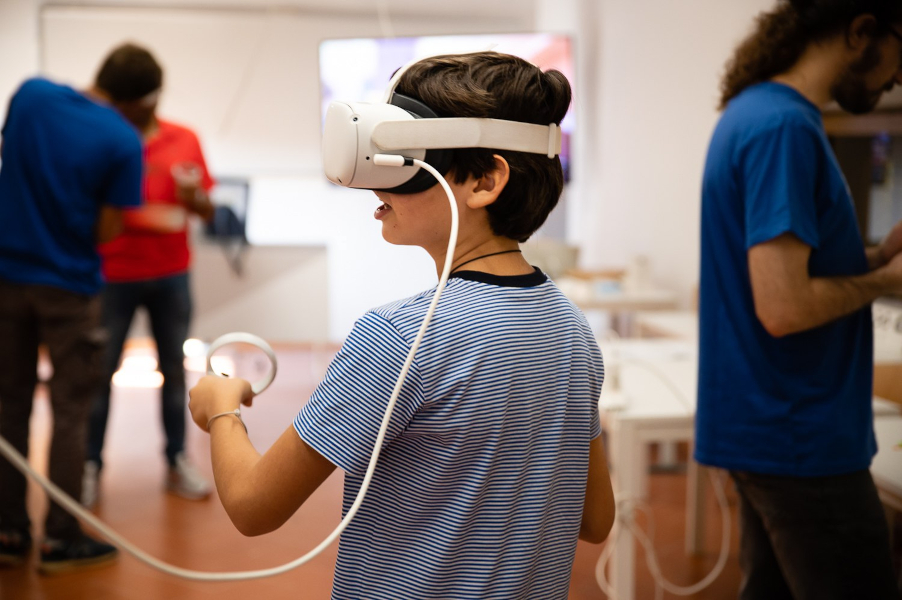
Sunday’s programme also featured discussions on democracy in the age of artificial intelligence, the changing geographies of digital power and representations of difference, alongside T-Tour activities, exhibitions and installations devoted to robotics, quantum computing and inclusive technologies.
The sixteenth edition of Internet Festival finally drew to a close with music from SARAFINE, who performed a DJ set at the Logge dei Banchi blending electronic music, dubstep, techno and pop.
It was the finale to four days in which Pisa sought to look towards the future without passively submitting to it, reaffirming that no innovation can truly be “wise” if it abandons responsibility, conscience and human dignity.
Internet Festival 2026 is promoted by Regione Toscana, the Municipality of Pisa, the .it Registry and the CNR Institute of Informatics and Telematics, the University of Pisa, the Scuola Superiore Sant’Anna and the Scuola Normale Superiore, together with the North-West Tuscany Chamber of Commerce, the Province of Pisa and the Festival della Scienza Association.
It is also supported by Unione Industriale Pisana and Corecom, with a contribution from Fondazione Pisa. The Festival is designed and organised by Fondazione Sistema Toscana.