


A small specimen preserved for centuries in the collections of the Museum of Natural History of the University of Pisa has become the new global reference for one of the world’s best-studied snail species. The specimen belongs to the grove snail (Cepaea nemoralis), a species that has served for more than a century as a model organism for research into population genetics, shell polymorphism and evolutionary processes.
A study published in the journal Deinsea, entitled Protecting the names of Cepaea nemoralis (Linnaeus, 1758) and some other well-known helicoids, has designated a specimen preserved in the collections of the Museum of Natural History of the University of Pisa as the lectotype of the species. The study was authored by Marijn T. Roosen, Antonio Callea, a collaborator at the Museum of Natural History of the University of Pisa, and Menno Schilthuizen.
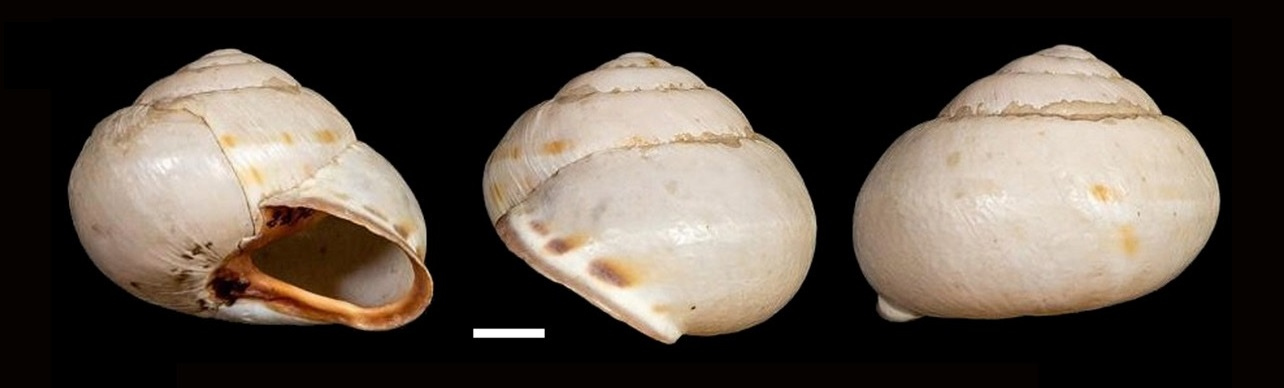
To reach this conclusion, the authors re-examined the original material used by Carl Linnaeus in 1758 to describe the species. Their analysis showed that many of the specimens historically associated with Cepaea nemoralis actually belong to a different species, Cepaea hortensis, while others have been lost or cannot be identified with certainty.
This situation could have created instability in zoological nomenclature, with implications for the scientific literature and the many studies conducted on this species.
To avoid this outcome, the researchers designated specimen MSNUP 2376, preserved in the zoological collections of the Museum of Natural History of the University of Pisa, as the lectotype, the reference specimen on which the scientific name is based. The specimen forms part of the historic collection of Niccolò Gualtieri; it had already been illustrated in 1742 and was subsequently used by Linnaeus in his original 1758 description of the species.
According to the authors, it is the only syntype still available whose attribution to Cepaea nemoralis is not disputed. Its designation therefore preserves the use of the scientific name as it has been understood and applied by the scientific community over the past two centuries. This achievement highlights the value of research and historical collections.
The study also emphasises the fundamental role of museum collections in contemporary research. Historical specimens preserved in museums are not merely records of the past; they are an essential scientific resource for taxonomy, systematics and biodiversity conservation.