

A special evening dedicated to Europe, student participation and the construction of an increasingly open and international university community. On Friday 29 May, the Aula Magna Nuova of the Palazzo della Sapienza hosted the Circle U. Gala Night, an initiative organised by the four Circle U. Ambassadors of the University of Pisa — Anna Terroni, Agata Bernacca, Diego La Gioia and Mattia Canale — to present the opportunities offered by the European University Alliance to the student representatives recently elected to University and Department bodies. The newly elected representatives were the primary audience of the event, which was designed to introduce them from the very beginning of their mandate to a resource that could support their work within university governance structures.
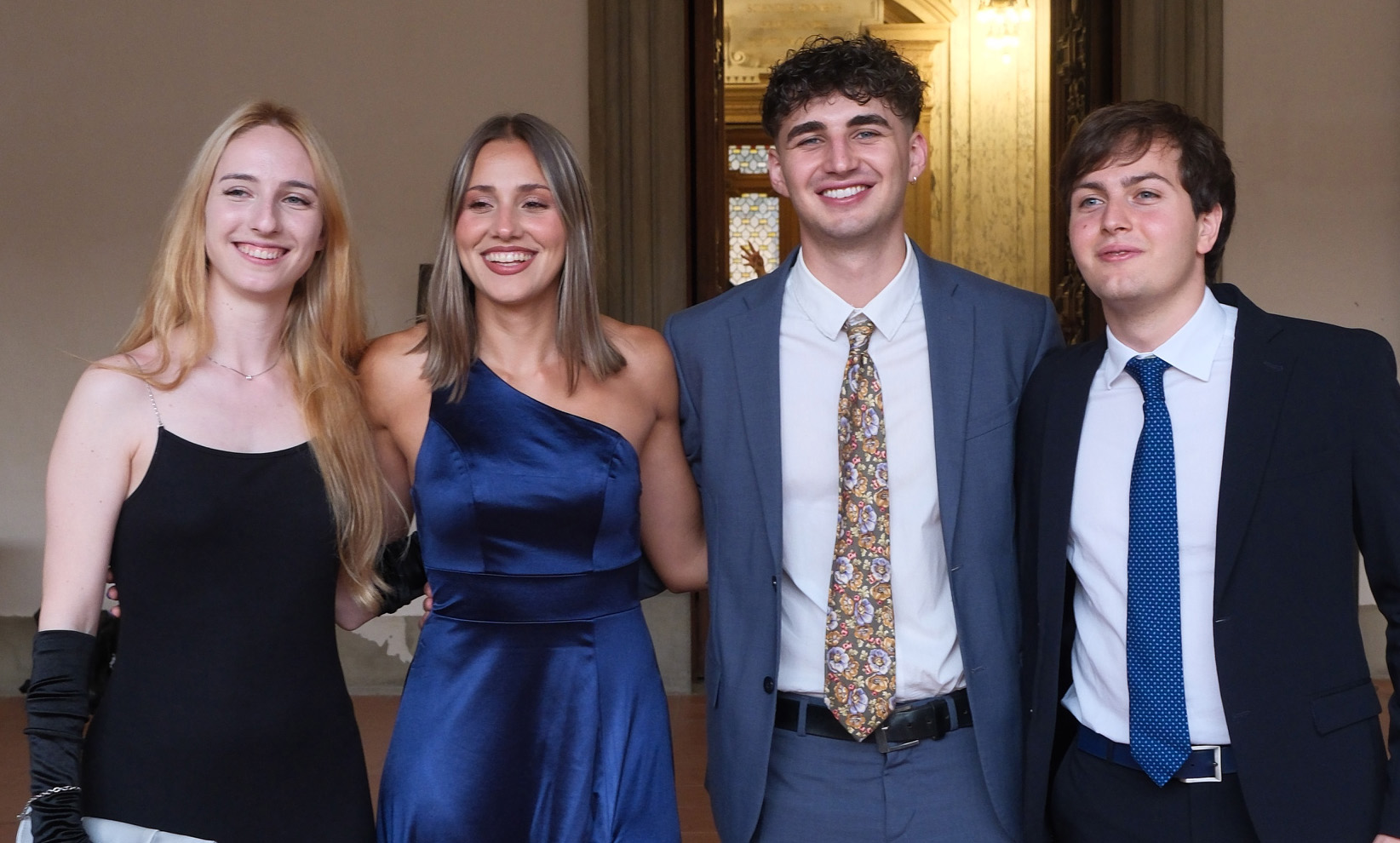
The event was attended by Rector Riccardo Zucchi, Vice-Rector for Cooperation and International Relations Giovanni Federico Gronchi, Vice-Rector for the University Community Cohesion and the Right to Higher Education Enza Pellecchia, Rector’s Delegate for the Promotion and Coordination of Circle U. Activities Alessio Cavicchi, as well as numerous students, representatives and members of the university community.
The evening was opened by Alessio Cavicchi, who highlighted the value of the event as a meeting point between the University’s European dimension and student participation. “Circle U. can only be a great opportunity if it is not perceived as something distant and reserved for a few people,” he stated, encouraging student representatives to view the Alliance as a tool through which they could contribute to building “a more open, more European university, and one that is better able to create a sense of community”. According to Cavicchi, the Ambassadors play a central role in this process, acting as a bridge between students and the international network of partner universities.
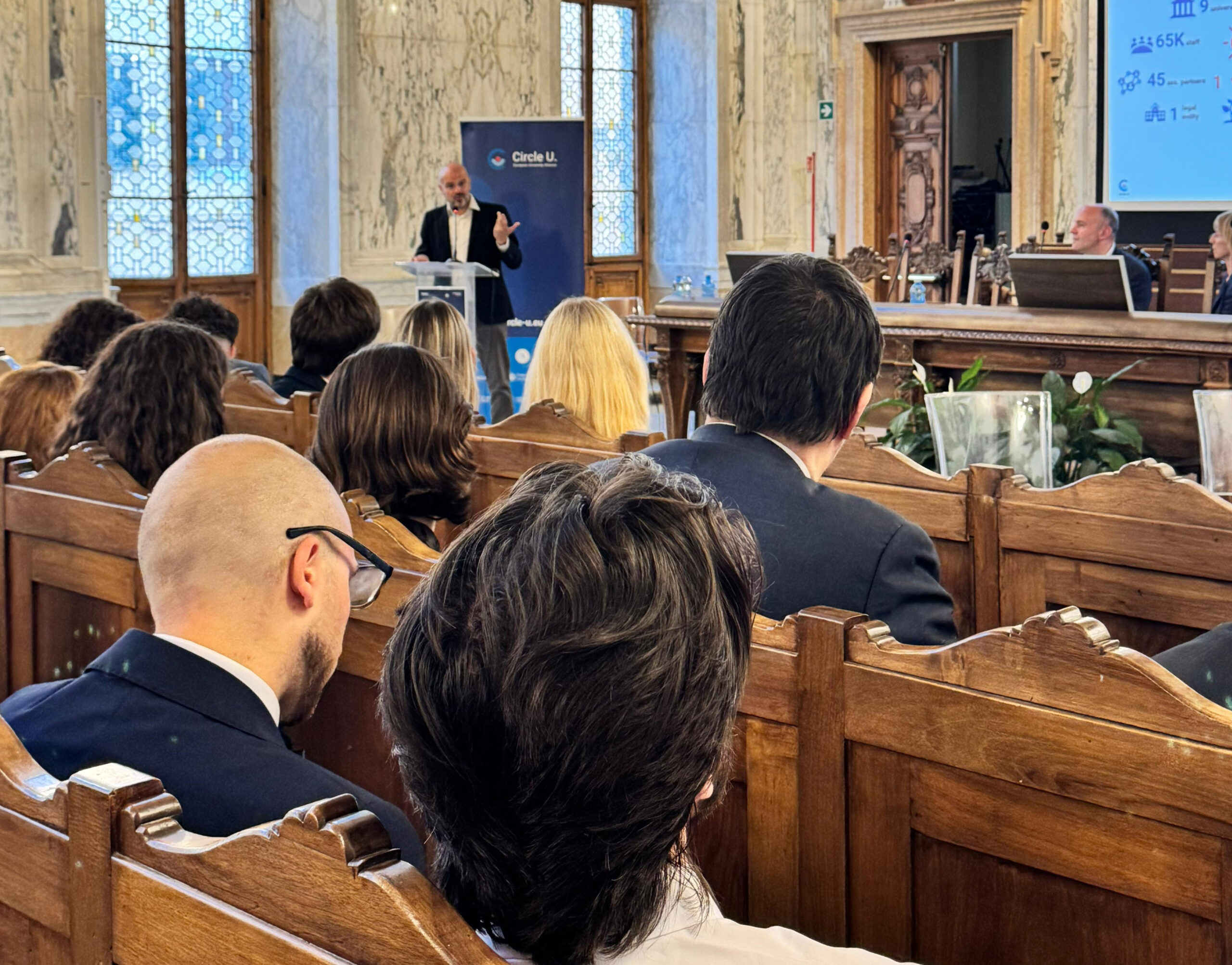
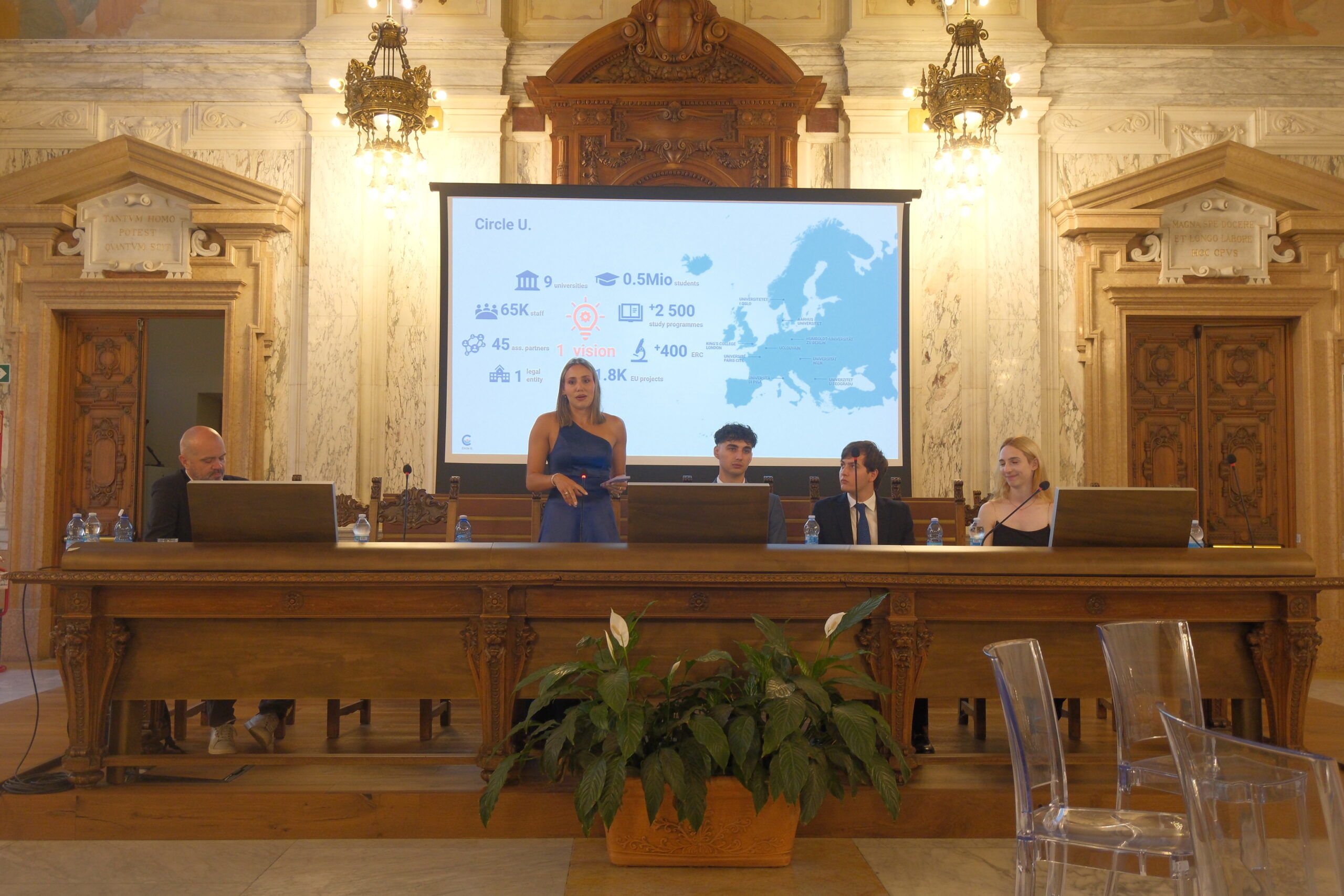
The evening’s main protagonists were the four Ambassadors of the University of Pisa, who shared experiences, projects and perspectives linked to Circle U. through a joint presentation aimed above all at the student representatives in attendance.
Anna Terroni opened the discussion by inviting the audience to look beyond the formal dimension of internationalisation. “Very often, the university risks becoming an extremely fragmented place,” she observed, explaining how Circle U. instead offers a concrete opportunity to feel part of a broader community built on collaboration among students, lecturers and researchers from nine European universities. The Alliance is not only about international mobility, but also about webinars, workshops, summer schools and opportunities for exchange that enable students to engage with people, ideas and experiences from across Europe.
Through her personal experience, Agata Bernacca illustrated how this European dimension translates into tangible opportunities. From participating in a Model United Nations event in Brussels to attending a Serbian language workshop and a course on the Anthropocene hosted in Pisa, Bernacca highlighted the human and cultural value of the initiatives promoted by the Alliance. “The idea of a European open campus becomes tangible: it ceases to be an abstract concept and becomes a room full of people and ideas,” she said, emphasising how these experiences contribute not only to academic development but also to personal growth.
The theme of active participation was at the centre of Diego La Gioia’s contribution. Addressing the student representatives in particular, he described the role students play in the day-to-day construction of the Alliance. “Circle U. works in two ways: there is what comes from above, from the European Alliance, and there is what you decide to build yourself, here, within your own university,” he explained. Drawing on his experience promoting projects through the opportunities and structures offered by Circle U., Diego highlighted both the potential of the University of Pisa community and the role of Ambassadors as a link between student needs and the opportunities offered by the European network. “The difference,” he concluded, “is between being part of an alliance and being an alliance.”
The final speech was delivered by Mattia Canale, who placed Circle U. within a broader reflection on the future of Europe and the role of universities in fostering European citizenship. Referring to the famous Schuman Declaration of 1950, Mattia recalled that Europe was built through “concrete achievements which first create a de facto solidarity”. He stressed that this solidarity is built above all through relationships between people and communities. From this perspective, Circle U. represents “a vehicle for the concrete realisation of this de facto solidarity among European universities”, capable of bringing together lecturers, associations and student representatives to strengthen the sense of belonging to a shared European academic space.
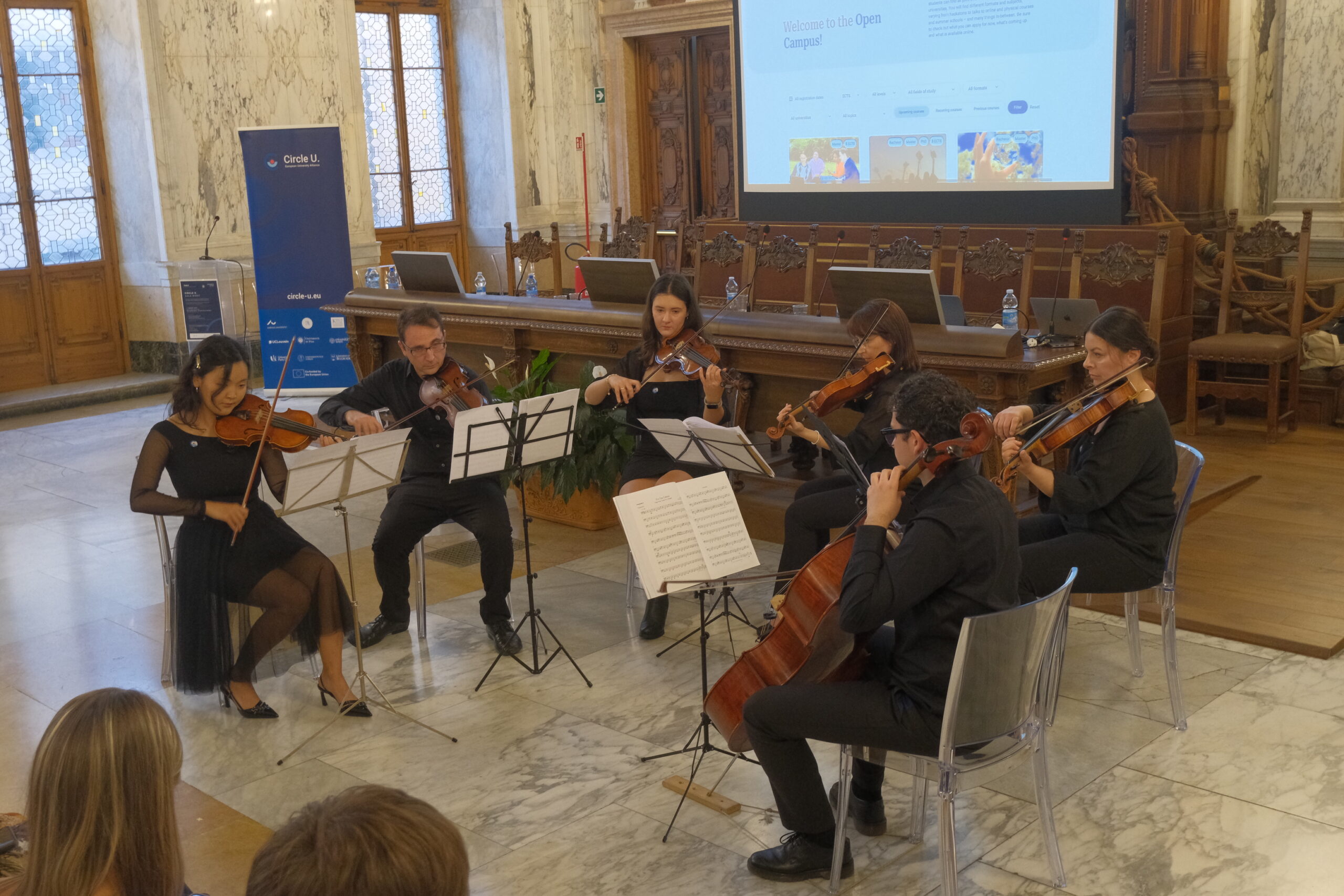
The evening was enriched by a highly appreciated musical interlude performed by a string sextet from the University of Pisa Orchestra, which accompanied the event with a musical tribute before the closing toast. The performers were Paolo Campione and Tungalag Sanchir on first violins, Denise Yügrük and Debora Napoli on second violins, Renata Benedetto on viola and Piero Liuzzi on cello.
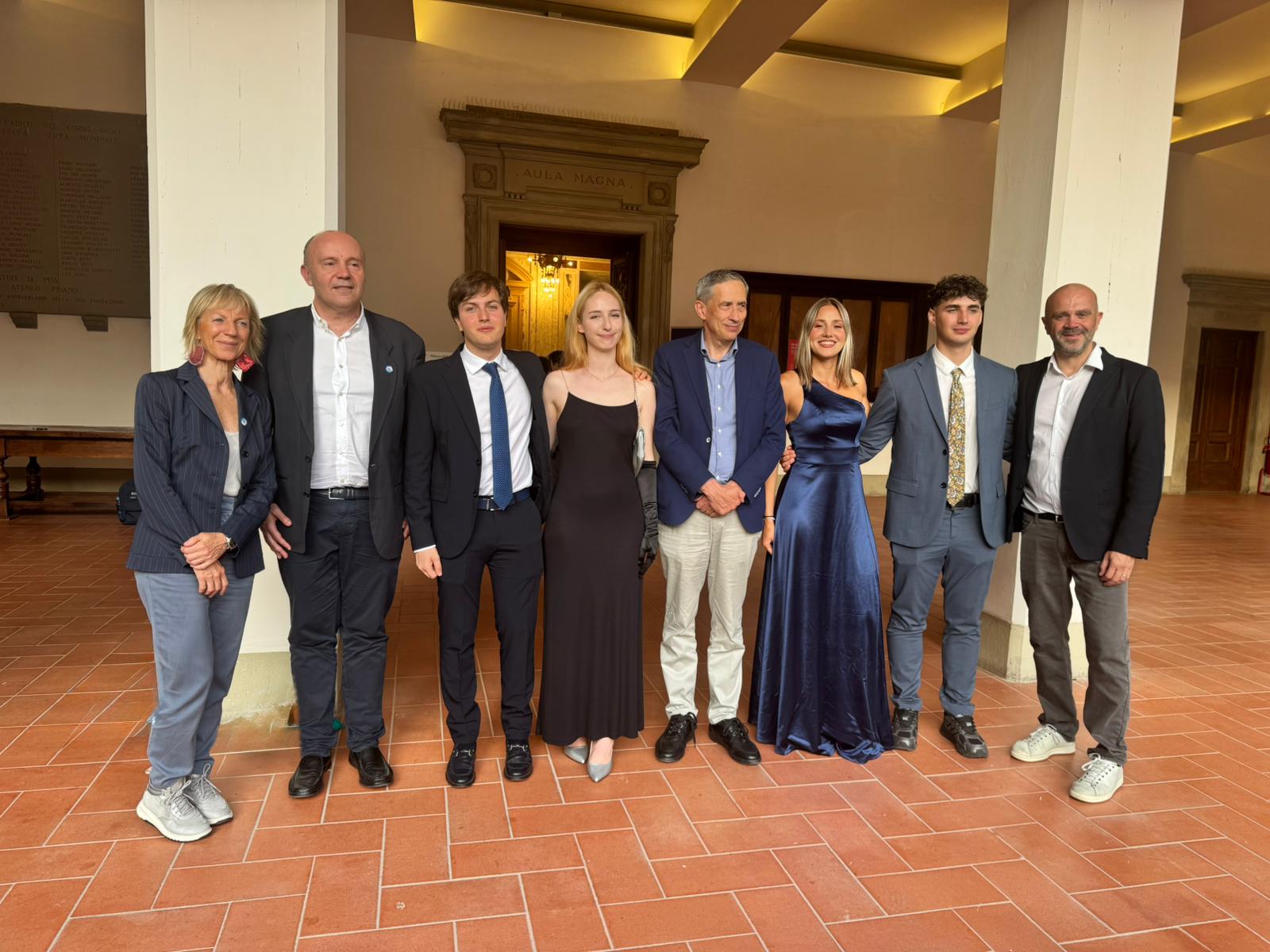
The final reception provided participants with an opportunity to continue discussions in an informal setting, fostering new contacts and exchanges of ideas among students, representatives and members of the academic community. Above all, it offered newly elected representatives the chance to begin seeing Circle U. not as something distant, but as a practical tool to be integrated into their everyday work within university governing bodies.