

On 10 February 2026, the first four students graduated from the Communication, Media and Technology (CoMeTe) master’s degree course, which was launched by the Department of Civilisation and Forms of Knowledge at the University of Pisa in 2024. The course provides specialist knowledge of various communication methods in relation to new technologies, particularly artificial intelligence and visual media. Potential career paths include roles such as communications and marketing manager, press office and public relations manager, cultural events organiser, media planner and digital communications specialist.
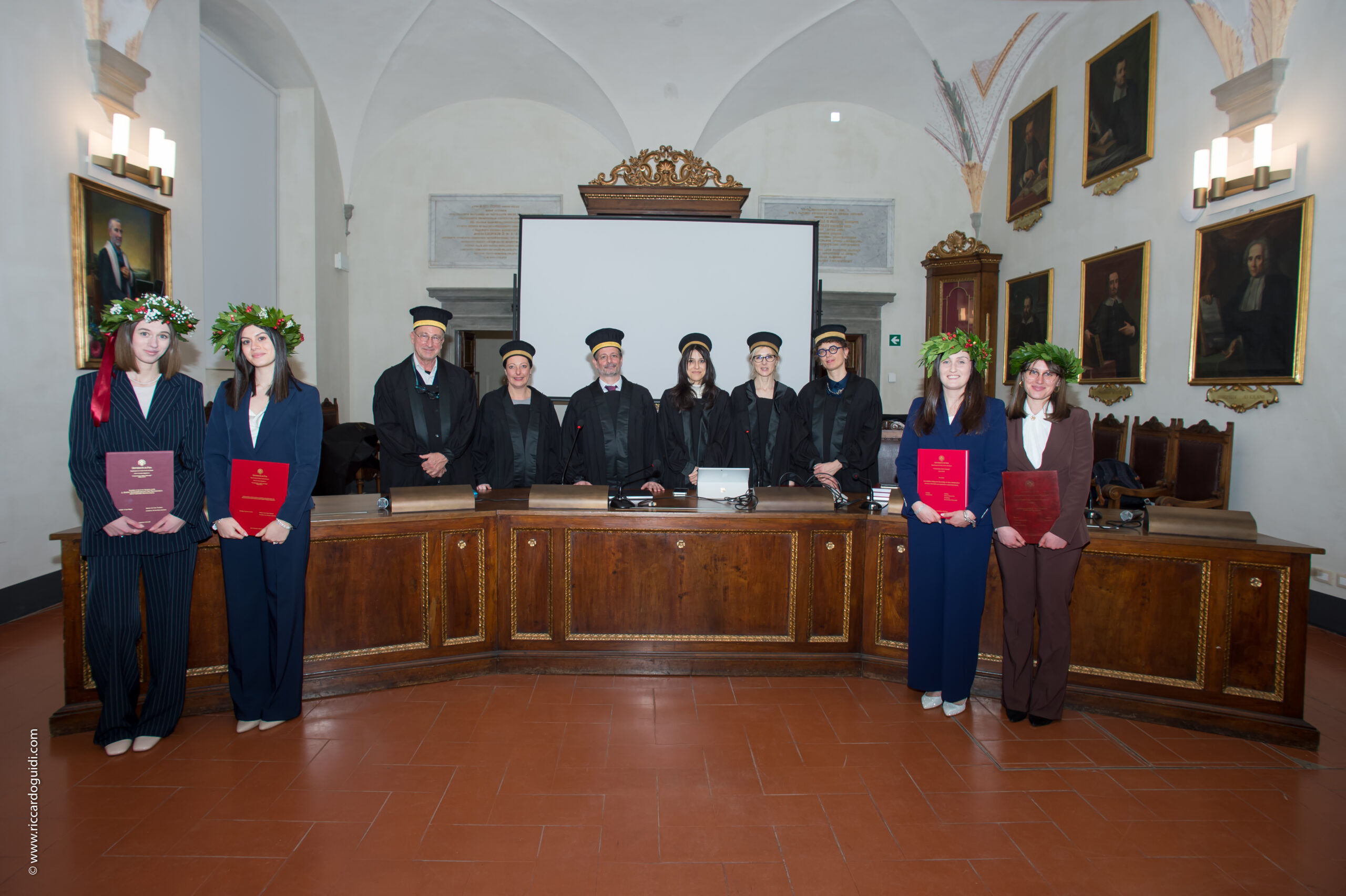
Among the four graduates is Alice Spadoni, 25, from Massa, who presented a thesis entitled ‘Artificial intelligence, ethics and deepfakes: truth in the digital age’. Her research explores how artificial intelligence and deepfakes are redefining the concept of truth in the digital age by analysing the ethical opportunities and risks through case studies such as the viral fake photos of Nicolás Maduro’s arrest.
Twenty-six-year-old Camilla Sbrana, who grew up in Pisa, presented a thesis entitled “Accessibility, indigenous knowledge and communicative ethics: an interactive museum to enhance human connections”. Her research addresses the preservation of the cultural heritage of Canadian indigenous peoples through technology by developing a project for an interactive museum that uses artificial intelligence to ensure full accessibility and disseminate the traditions of native communities.
Francesca Leoncini, born in 2001 and a resident of Ponsacco, Pisa, presented a thesis entitled “The Italy of la dolce vita and the America of the seven sins: Oriana Fallaci between journalism and cinematic myth’. It explores how Italian cultural journalism evolved through Fallaci’s work, analysing how she combined reportage and criticism in her writing about Hollywood and Cinecittà, creating a unique narrative style that blended news reporting with the observation of cinematic myths.
Giorgia Saggini, born in 2000 and from Riotorto (Livorno), presented a thesis entitled “Theatre and new technologies: Shakespearean theatre between tradition and technological innovation”. This thesis investigates the ways in which new technologies are transforming Shakespearean theatre, resulting in hybrid forms that combine the stage with audiovisual elements and redefine the spectator’s experience and the very nature of performance.
‘It is with great satisfaction,’ says Antonio Masala, president of the course of studies, ‘that we celebrate our first graduates today. The topics they have chosen for their theses and the path they have taken confirm the innovative vision of the course, which is strongly oriented towards the dynamics of contemporary communication and integration with new technologies, from artificial intelligence to visual media. We are convinced that these young graduates are leaving the University of Pisa with solid, up-to-date skills and are ready to make a significant contribution to the world of work.”